Where Ancient Temples Meet Ancient Trees
The Luckytata birthplace lies in Dujiangyan, on the western edge of the Chengdu Plain in Sichuan, China. Here, a water system built more than two thousand years ago continues to serve the land, Taoist temples rest beneath forested mountains, and ancient trees preserve living memories that reach back through many dynasties.
This is not simply a picturesque background chosen for a brand story. Dujiangyan and Mount Qingcheng form a cultural landscape in which water, mountains, temples, trees and people have remained connected for centuries. In 2000, Mount Qingcheng and the Dujiangyan Irrigation System were inscribed together on the UNESCO World Heritage List as a cultural property.
To understand why Luckytata was born here, we must first understand the two forces that shaped this landscape: the flowing water of Dujiangyan and the quiet mountains of Qingcheng.
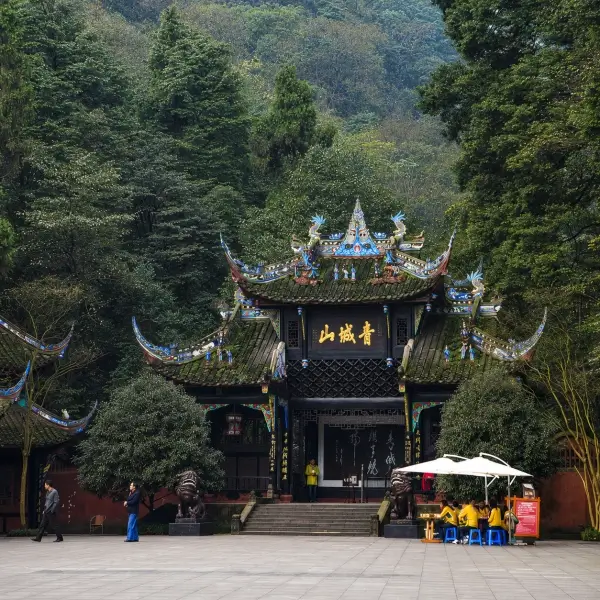
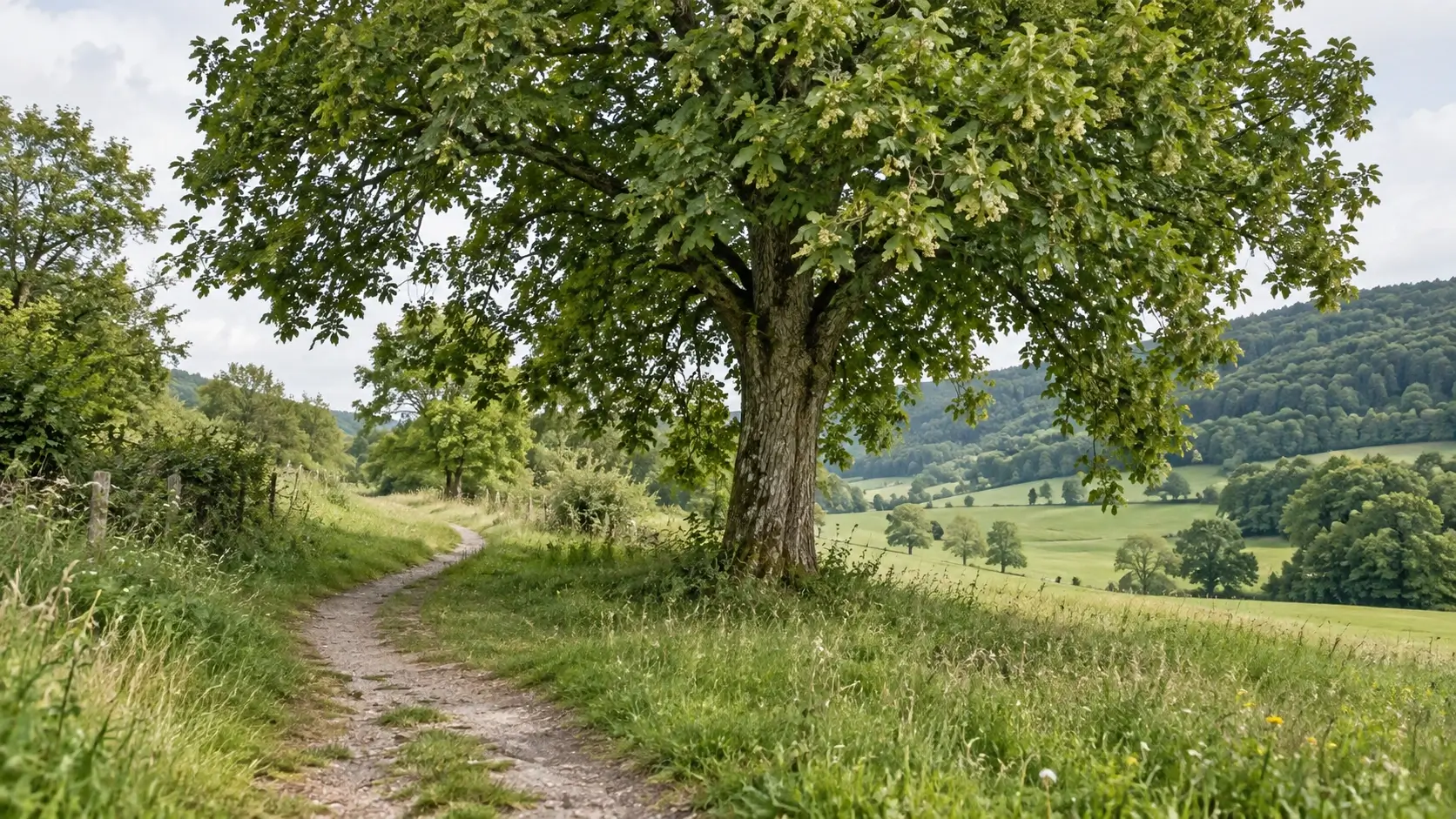
*The Ancient Gate of Mount Qingcheng
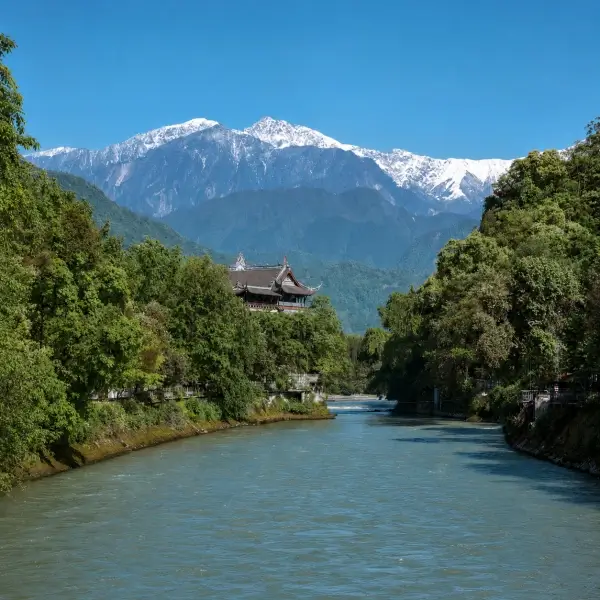
*Dujiangyan Beneath the Snowy Mountains
The Luckytata Birthplace Begins with the Waters of Dujiangyan
Before the Dujiangyan Irrigation System was created, seasonal floods from the Minjiang River repeatedly threatened the Chengdu Plain. Rather than attempting to stop the river behind a conventional dam, the builders developed a system that worked with the river’s natural current, terrain and sediment.
Its three central structures still define the system today. The Yuzui, or Fish Mouth Levee, divides the Minjiang River into inner and outer channels. Feishayan releases excess water and helps remove sediment, while Baopingkou controls the amount of water entering the irrigation network.
Together, they created an adaptable form of water management that could divert water, control floods and reduce sediment without permanently blocking the river.
A Timeline of the Dujiangyan Irrigation System
- Around 256 BCE: Li Bing, governor of the Qin state’s Shu Commandery, led the construction of the Dujiangyan Irrigation System with local people.
- Tang dynasty, 618–907: The system was maintained, modified and expanded as agricultural production and settlements developed across the Chengdu Plain.
- Song dynasty, 960–1279: Further improvements strengthened irrigation management and the long-term maintenance system.
- Yuan dynasty, 1271–1368: Dujiangyan continued to be repaired and enlarged, demonstrating that the project was not a frozen monument but an evolving public system.
- Ming dynasty, 1368–1644: Additional reconstruction and water-management work preserved the essential design while adapting it to changing local needs.
- 2000: UNESCO inscribed the Dujiangyan Irrigation System together with Mount Qingcheng on the World Heritage List.
- May 12, 2008: The major Sichuan earthquake struck the region. UNESCO reports that the irrigation system was basically undamaged, although some Taoist buildings in the wider heritage area were affected.
- Today: More than 2,250 years after its construction began, the system remains operational. According to the UNESCO World Heritage Centre, it irrigates approximately 668,700 hectares of farmland.
The deepest significance of Dujiangyan is not simply its age. Many ancient structures have survived as ruins, but Dujiangyan survives as a functioning relationship between people and nature.
Its builders did not try to overpower the Minjiang River. They studied its seasonal movement, the angle of the land and the behavior of sediment. The result was a system based on guidance, division and adjustment. It represents an ancient understanding that lasting strength often comes from responding to nature rather than confronting it.
That philosophy forms the first foundation of the Luckytata birthplace: strength does not always mean resistance. Sometimes it means learning how to move with forces greater than ourselves.
Mount Qingcheng and the Growth of a Taoist Sacred Landscape
South of the irrigation system rises Mount Qingcheng. Its green peaks appear to surround the inner landscape like the walls of a natural city, which is traditionally associated with the name Qingcheng, meaning “green city.”
The mountain is widely recognized as one of the birthplaces of Taoism. Its significance comes not from one isolated temple, but from the relationship between religious practice, mountain geography, traditional architecture and the surrounding forest.
Taoist buildings on Mount Qingcheng were generally arranged according to the natural terrain. They follow slopes, disappear beneath trees and emerge gradually along mountain paths. Instead of dominating the landscape, the temples appear to belong to it.
A Timeline of Mount Qingcheng
- 142 CE: According to UNESCO’s historical account, the philosopher Zhang Ling established the doctrine of Chinese Taoism on Mount Qingcheng.
- Jin dynasty, 266–420: Taoist teachings continued to develop, and religious buildings were established on the mountain.
- Tang dynasty, 618–907: Mount Qingcheng became an increasingly influential Taoist center. Temples and halls expanded while the mountain’s religious culture became more deeply established.
- Seventeenth century: UNESCO records that Mount Qingcheng resumed its role as an intellectual and spiritual center of Taoism.
- 2000: Mount Qingcheng and Dujiangyan were jointly inscribed on the UNESCO World Heritage List under criteria (ii), (iv) and (vi).
- 2008: Parts of the Taoist temple complex were damaged during the Sichuan earthquake. Conservation and repair work was later carried out while respecting traditional locations, designs, materials and techniques.
- 2018 onward: Tree specialists from Chengdu Botanical Garden began health inspections and electronic records for ancient trees in the Dujiangyan area, including the celebrated ginkgo at Tianshi Cave.
- 2025: Tianshi Cave and its approximately 1,900-year-old ginkgo were included in China’s first national collaborative protection list connecting major cultural heritage sites with ancient and notable trees.
The decision to inscribe Mount Qingcheng and Dujiangyan together is important. One represents practical intelligence expressed through water engineering. The other represents philosophical and spiritual traditions expressed through temples, forests and mountain paths.
Together, they form a UNESCO World Cultural Heritage landscape where technology and belief are not treated as opposites. Both are based on observing natural patterns and finding a sustainable place within them.
This union of movement and stillness gives the Luckytata birthplace its distinctive character. Dujiangyan teaches people how to live with water; Mount Qingcheng asks them to slow down, observe and return to inner balance.
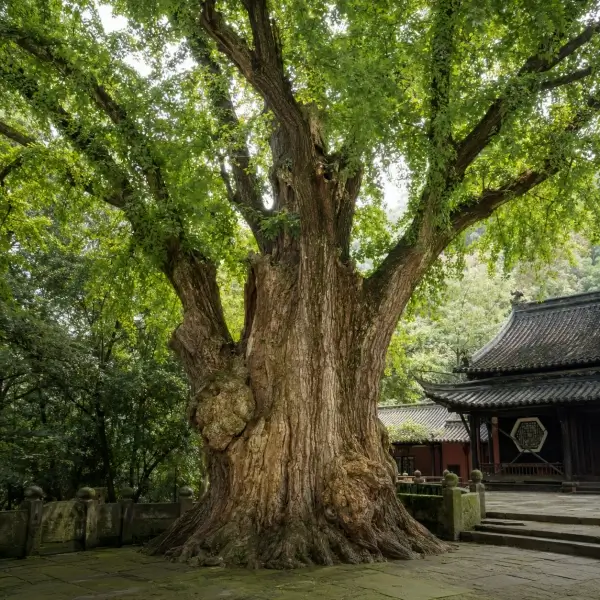
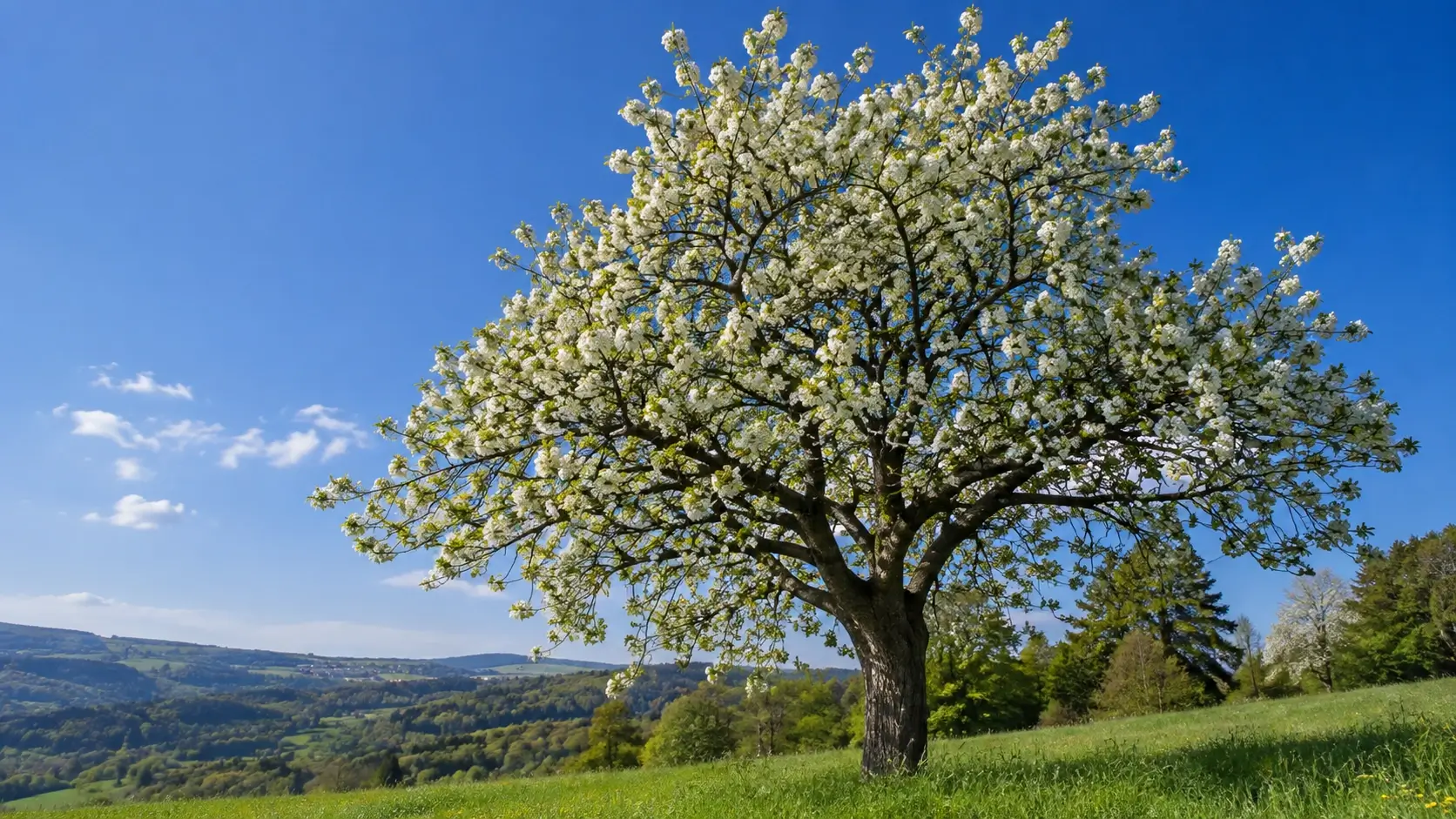
*1,900-Year-Old Ginkgo Tree at Mount Qingcheng
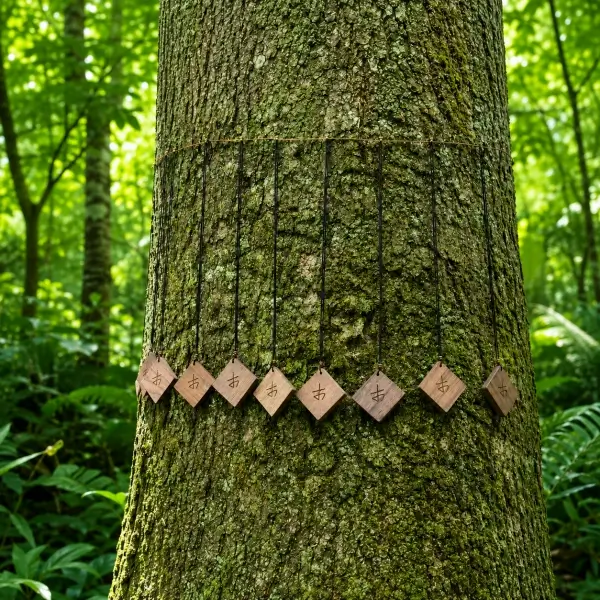
*Luckytata Hanging on an Ancient Tree at Mount Qingcheng
Ancient Trees Around the Luckytata Birthplace
Ancient trees are the living bridge between these two worlds. They grow beside temples, within historic parks, along old routes, in mountain communities and near places where generations of people have gathered.
A January 2025 report republished by Sichuan Online from CCTV states that Dujiangyan has approximately 1,844 registered ancient and notable trees. This number covers Dujiangyan as a city-level area, not Mount Qingcheng alone.
The currently available public reports do not provide a reliable town-by-town breakdown or specify exactly how many of those 1,844 trees are more than one thousand years old. It would therefore be inaccurate to present an invented local subtotal. However, several thousand-year-old trees have been individually documented.
The most famous is the Tianshi Ginkgo beside Tianshi Cave on Mount Qingcheng. Estimated to be about 1,900 years old, it is often regarded as the mountain’s guardian tree. Its location is especially meaningful: an ancient living organism and an important Taoist building have shared the same cultural space for centuries.
Another example is the Zhang Song Ginkgo in Lidui Park near the Dujiangyan heritage area. Sichuan local-history sources estimate it to be around 1,800 years old. Its survival, including historical transplantation, has made it one of the region’s best-known ancient trees.
The documented distribution therefore extends beyond a single forest. Important trees can be found in at least three types of environment:
- Around the Taoist temples and mountain paths of Mount Qingcheng, represented by the Tianshi Ginkgo.
- Within the Dujiangyan scenic and hydraulic heritage zone, represented by the Zhang Song Ginkgo in Lidui Park.
- Across surrounding communities and natural habitats, where ancient ginkgo trees and historically important species continue to grow.
The region also supports relict species such as dawn redwood and dove tree. Their presence expands the meaning of the local landscape: it preserves not only individual old trees but also plant lineages connected with much earlier periods of natural history.
These trees are sometimes described as “living cultural relics.” Yet their present condition cannot be protected by admiration alone. Old trees face soil compaction, pests, lightning, extreme weather, root disturbance and pressure from large numbers of visitors. Modern conservation therefore includes health examinations, individual records, protective boundaries and specialized treatment.
The trees surrounding the Luckytata birthplace are not abandoned survivors. They are increasingly treated as living heritage that requires continuous scientific care.
Why Luckytata Was Born in This Landscape
Luckytata emerged from an environment where time is visible everywhere: in the water channels shaped across dynasties, in temple roofs sheltered by mountain forests and in tree trunks that were already growing before many of today’s cities existed.
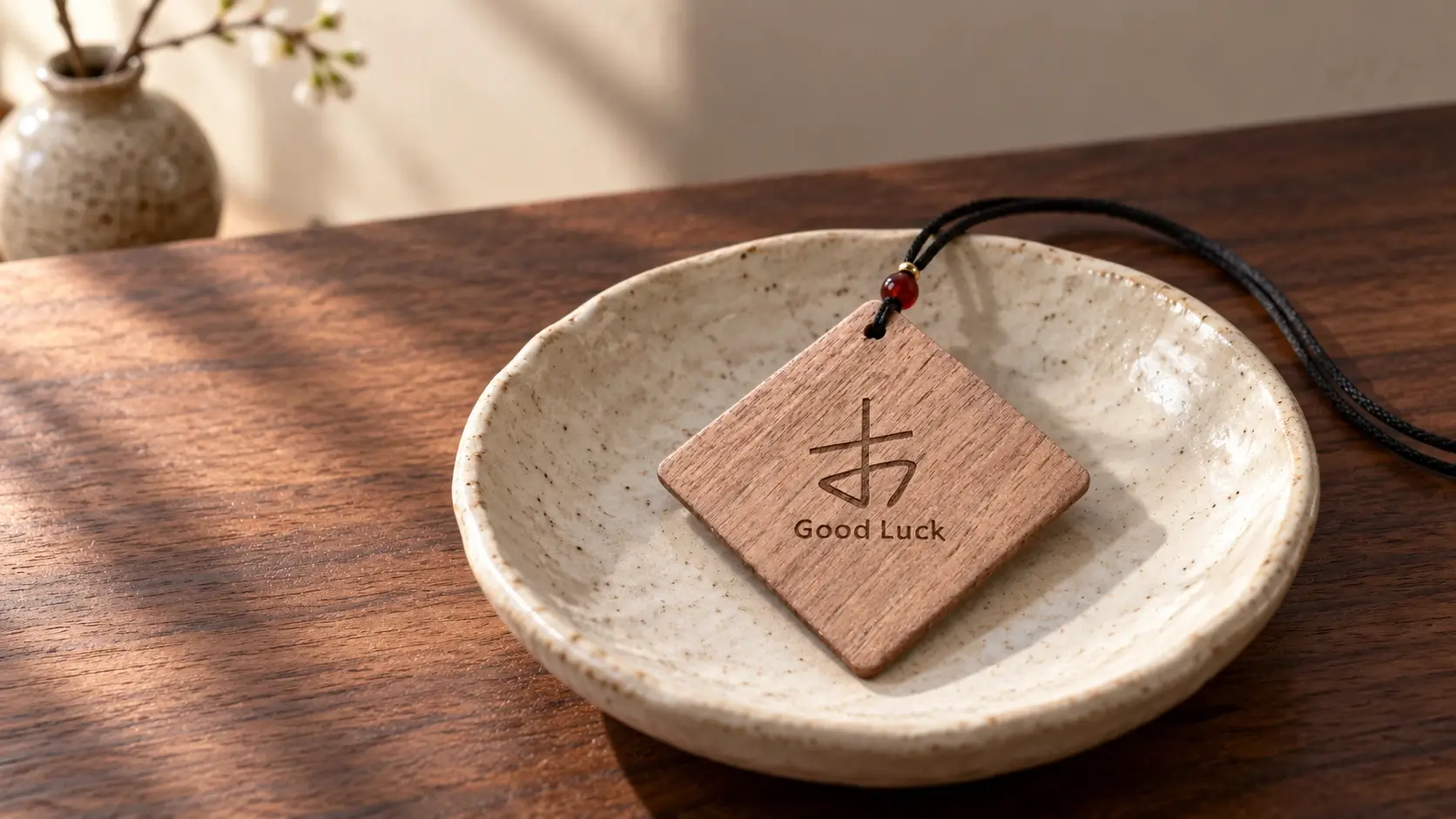
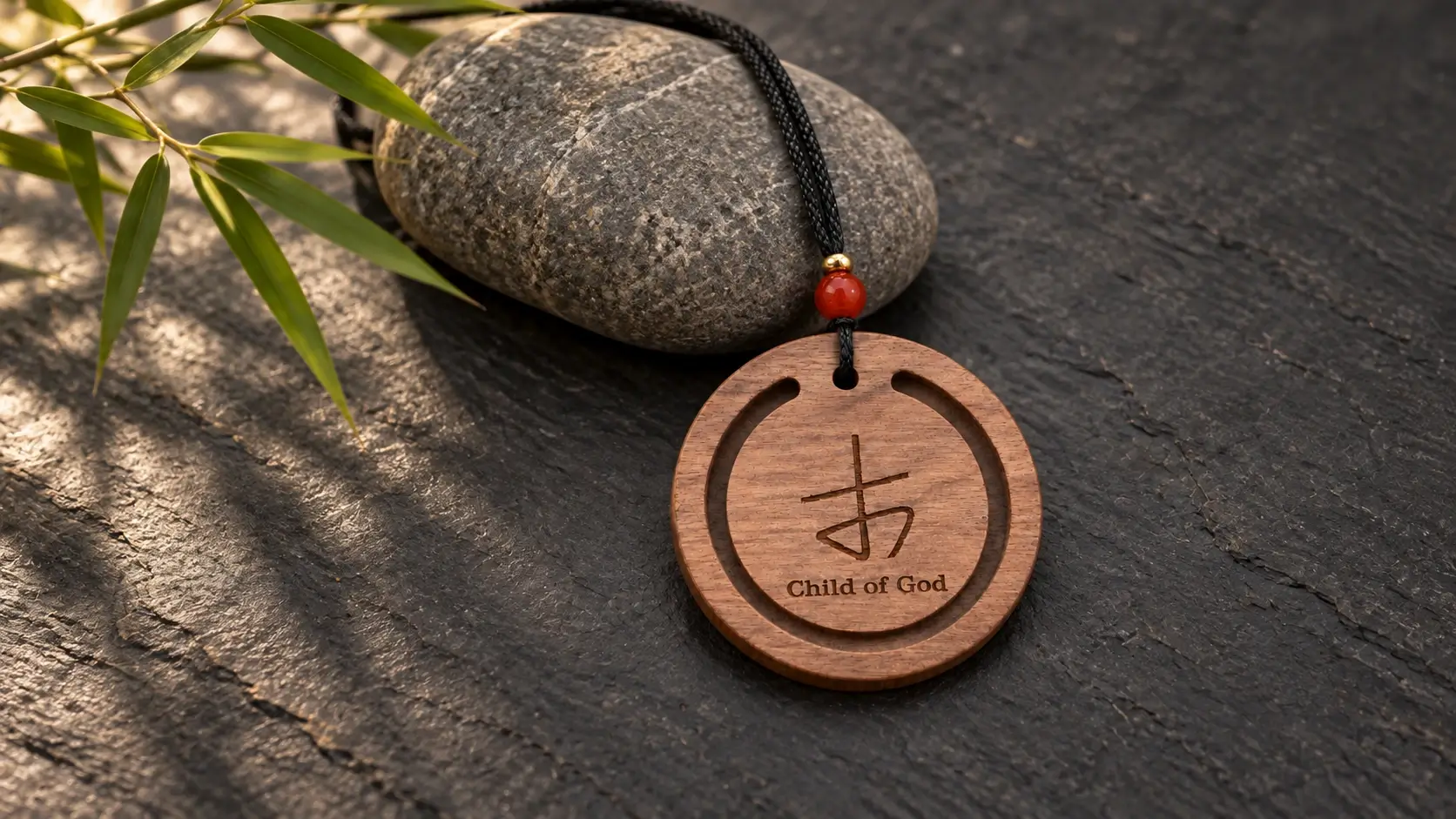
The brand’s connection with ancient trees is symbolic and respectful. Luckytata pendants are not made from ancient-tree wood. Most pieces are crafted from legally sourced black walnut and are placed respectfully on selected mature or ancient trees for a period of time. This process represents a connection with endurance, vitality and the traditional idea of receiving nature’s blessing.
You can read more about the story behind Luckytata and the ancient Tianshi Ginkgo of Mount Qingcheng.
A Luckytata pendant cannot contain two thousand years of history in a literal sense. What it can carry is a story and a personal intention. Its wood grain recalls growth. Its time among trees represents patience. Its blessing inscription gives the wearer a private reminder of love, safety or good fortune.
This distinction is important. Luckytata does not claim ownership of the heritage of Dujiangyan or Mount Qingcheng, nor does it replace the traditions that developed there. It draws inspiration from a landscape that teaches respect for time and resilience.
The purpose is to take a small symbol born from this environment and allow it to enter homes around the world. Each pendant becomes a connection between an individual and a much older story—between modern daily life and a place where ancient water, ancient temples and ancient trees still coexist.
That connection also carries responsibility. The Planting Trees for Tomorrow initiative reflects the idea that receiving inspiration from trees should be accompanied by giving something back. Protecting old trees and planting young ones are different tasks, but both belong to the same long view of time.
A Blessing Meant to Travel Beyond the Mountains
The story of the Luckytata birthplace begins with a landscape that has never stopped living. Dujiangyan continues to guide water. Mount Qingcheng continues to preserve Taoist traditions. Ancient ginkgo trees continue to grow beside temples and historic paths.
Their meaning lies in continuity. Water flows because generations maintain its channels. Temples survive because people preserve their materials and traditions. Ancient trees remain alive because communities choose to protect them.
Luckytata was born within this meeting of ancient temples and ancient trees, carrying a simple wish: to share a symbol of resilience, protection and good fortune with as many people as possible.
From the Luckytata birthplace in Dujiangyan to homes around the world, each piece is intended to carry that quiet message forward—a blessing shaped by time, entrusted to the present and passed gently into the future.