How the Large-Leaved Lime Offers Beauty and Nourishment
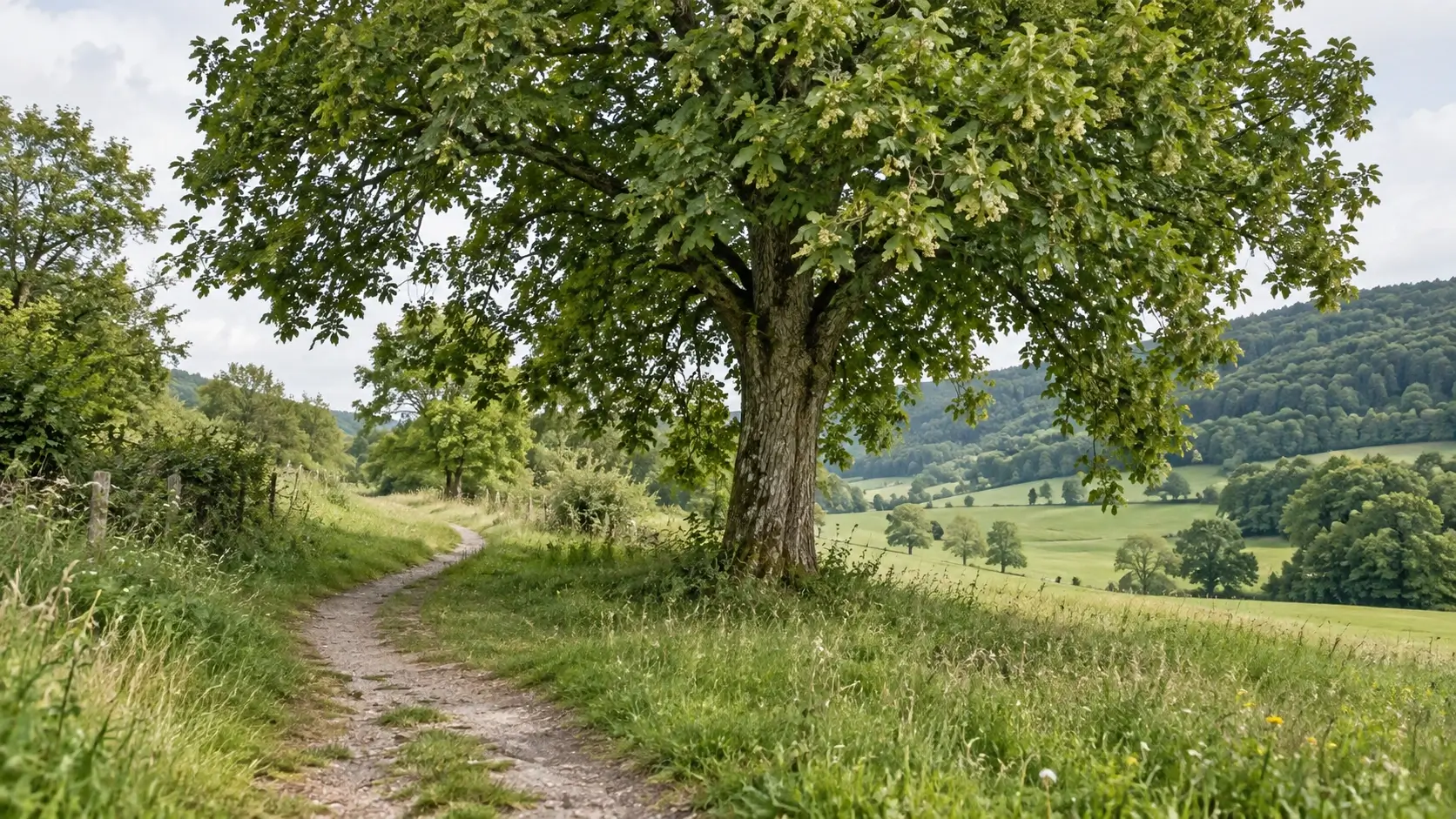
The large-leaved lime brings together many of the qualities that make a tree feel welcoming: fragrant summer blossom, generous shade and a canopy alive with insects. Known scientifically as Tilia platyphyllos, this European tree offers much more than an attractive silhouette. Its flowers feed pollinators, its foliage supports other animals, and its wood and blossoms have long served people. Looking closely reveals a tree whose beauty is inseparable from the life gathering around it.
How to Recognize a Large-Leaved Lime
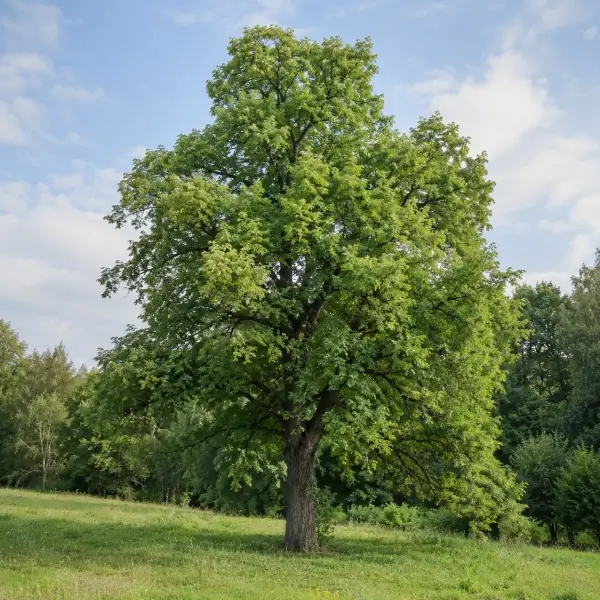
Also called the large-leaved linden, this deciduous member of the mallow family, Malvaceae, can reach about 40 metres. Its substantial crown gives mature specimens a striking presence in spacious landscapes.
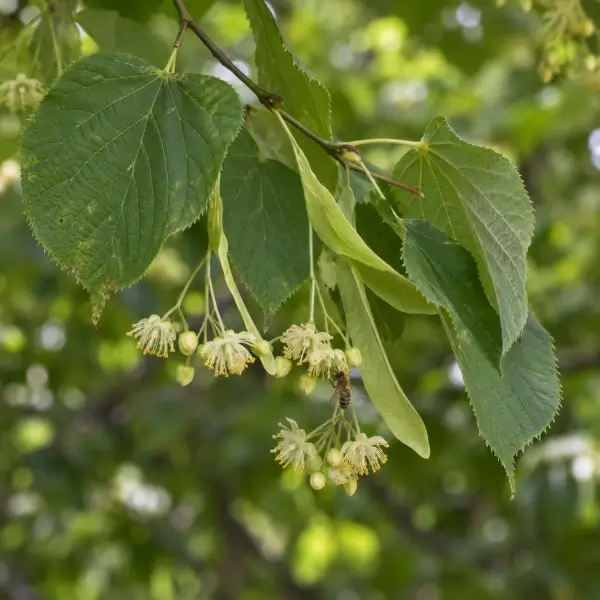
The leaves are heart-shaped, with pointed tips, toothed edges and uneven bases. Their upper surfaces are dark green, while the paler undersides carry soft hairs. In autumn, the foliage turns yellow before falling. These features, together with hanging clusters of fragrant pale-yellow flowers, are described in the Royal Horticultural Society’s species profile.
Identification deserves a little patience. Several lime species and their hybrids look similar, so leaf size alone is not enough. Examining the underside of a leaf provides a closer view of the details that distinguish them.
Where It Grows and Finds Room to Flourish
The large-leaved lime occurs naturally across much of Europe, with its range extending into southwestern Asia. Woodland populations and planted parkland trees offer different ways to encounter it.
For cultivation, the RHS recommends moist but well-drained soil and a position in sun or partial shade. Although often associated with lime-rich ground, it should not be described as needing exclusively non-acidic soil: the RHS lists acidic, neutral and alkaline conditions among its tolerances. Its eventual size also matters when choosing a planting position. A young sapling needs room to develop into a substantial tree.
For more introductions to distinctive species, explore Luckytata’s tree articles.
Fragrant Flowers and Fruits That Travel
Summer blossom changes the experience of standing beneath this tree. Small, pale flowers hang among the leaves, making scent as noticeable as colour. Their modest size contrasts with the activity they attract.
After flowering, small, nut-like fruits develop. A long, pale bract attached to the fruiting cluster helps with wind dispersal. This leaf-like structure is one of the most useful details to notice when examining fallen material beneath the canopy. The Dorset Wildlife Trust’s identification guide describes these winged fruits and the species’ importance to visiting insects.
Flowers, leaves and fruit each reveal a different part of the tree’s seasonal story, rewarding observation beyond its brief flowering display.
A Canopy That Feeds and Shelters Wildlife
A large-leaved lime supports animals through several interconnected food sources. Caterpillars, including those of the lime hawk-moth, eat its leaves. Aphids attract predators such as ladybirds, hoverflies and birds, while flowers supply nectar and pollen.
Older trees add another dimension. Cavities can provide nesting places, and dead wood supports wood-boring beetles. The Woodland Trust’s wildlife account shows how this habitat value extends beyond blossom.
Seen this way, the canopy is a shared living space. Some visitors feed directly on the tree; others arrive because prey or shelter is available.
What Research Says About Linden Trees and Bees
Reports of dead bees beneath linden trees, particularly silver linden (Tilia tomentosa), have prompted questions about nectar toxicity.
A 2018 study published in Apidologie examined four Tilia species, including T. platyphyllos. Researchers detected neither mannose nor nicotine in the sampled nectar. Bumblebees fed exclusively on the flowers showed no unusual mortality under the study conditions.
These findings challenge a simple poisoning explanation. They do not establish that every bee found beneath a tree died naturally. A 2017 research review identified food shortage near the end of flowering as a likely explanation for some deaths and recommended alternative late-summer forage.
Traditional Uses from Flowers to Foliage
Lime blossoms have traditionally been dried for aromatic tea. The pale, finely textured wood is soft and easy to work, making it useful for carving and turning. These uses are documented by the Woodland Trust.
The Agroforestry Research Trust also lists limes among trees with edible leaves. Fodder research offers another perspective: a study of a related linden taxon found nutritional potential in its foliage, alongside mineral-balance concerns. Those results should not be treated as a feeding prescription for this species.
A Quiet Expression of Generosity
The large-leaved lime invites appreciation through ordinary encounters: shade on a warm day, blossom overhead and insects moving between flowers. Its generosity is visible in the resources it provides. Valuing that living network gives us a grounded reason to admire and protect these trees.