How a Protection Pendant Can Hold Your Personal Meaning
A protection pendant can hold a wish that is difficult to put into words: travel safely, stay strong, or remember that someone cares about you. Worn close to the body, it gives that wish a visible form. Its significance may come from a religious tradition, a family memory, a meaningful inscription, or a personal connection with nature.
Understanding this jewelry begins with its history, but choosing a piece also involves everyday questions. What does the symbol mean? Does the material suit your lifestyle? Is the maker clear about the story behind it? A thoughtful choice brings these considerations together without expecting an ornament to guarantee safety or change events.
What Is a Protection Pendant?
A protection pendant is a piece of jewelry worn to represent a wish for protection, well-being, or spiritual support. The word “pendant” describes its form: an ornament suspended from a necklace or cord. “Protection” describes the meaning attached to it by its maker, wearer, or cultural tradition.
An amulet is a related idea, although amulets do not always hang around the neck. Isabel Stünkel’s essay for The Metropolitan Museum of Art explains that ancient Egyptian amulets could be worn on the body in several ways. Their perceived significance could involve shape, material, color, inscriptions, and ritual actions. See Ancient Egyptian Amulets.
For a modern buyer, the useful distinction is between physical design and personal meaning. Two people might wear similar necklaces for different reasons. One may express faith; another may remember a loved one. Neither story can be understood from appearance alone.
Why People Have Worn Protective Objects Through History
Protective jewelry belongs to a much wider history of meaningful objects. The Henry Moore Foundation’s exhibition text, A Kind of Magic, describes objects from the British Museum associated with protection and other supernatural beliefs. Some were displayed openly; others were concealed. The exhibition also connects certain objects with uncertain moments in life, including travel.
Ancient Egyptian examples offer a more specific picture. According to The Met, many amulets were accessible beyond the wealthy, and some had holes or loops for suspension. Their forms included animals, deities, and symbolic objects. These details show how protective meaning could become part of something small enough to carry or wear.
A modern protection pendant need not reproduce an ancient artifact to have personal value. However, historical examples deserve accurate attribution. A contemporary wooden keepsake should have its own clearly explained story rather than borrowing an ancient tradition it cannot document.
Understand the Symbol Before Choosing the Design
Start by asking what you want the piece to express. Protection can mean a prayer for safe travel, a reminder to maintain personal boundaries, or a loving message from someone far away. Being specific makes it easier to choose a design that feels meaningful beyond its first visual impression.
If a pendant uses a religious or cultural symbol, look for an explanation that identifies the relevant tradition. Avoid assuming that similar shapes always carry identical meanings. A seller should be able to describe the design clearly and distinguish documented history from a modern interpretation.
A protection pendant can also communicate through ordinary words. An inscription such as “Stay Safe” makes the intention direct, while “With Love” emphasizes the relationship behind the gift. A plain design may suit someone who prefers to keep the meaning private.
You do not need an elaborate explanation for every curve or line. Sometimes the most convincing story is simply that the piece was chosen with a particular person in mind.
Choose a Material You Will Enjoy Wearing
Material influences how a necklace looks, feels, and fits into your routine. When choosing a protection pendant, consider its weight, dimensions, surface finish, and the way it rests against clothing. A beautiful piece that feels awkward may spend more time in a drawer than around your neck.
Metal can suit someone who enjoys a polished appearance or detailed engraving. Check the listed composition, especially if you already know that certain metals irritate your skin. A stone pendant may appeal through its color and pattern, but ask whether it is natural, treated, or manufactured if that distinction matters to you.
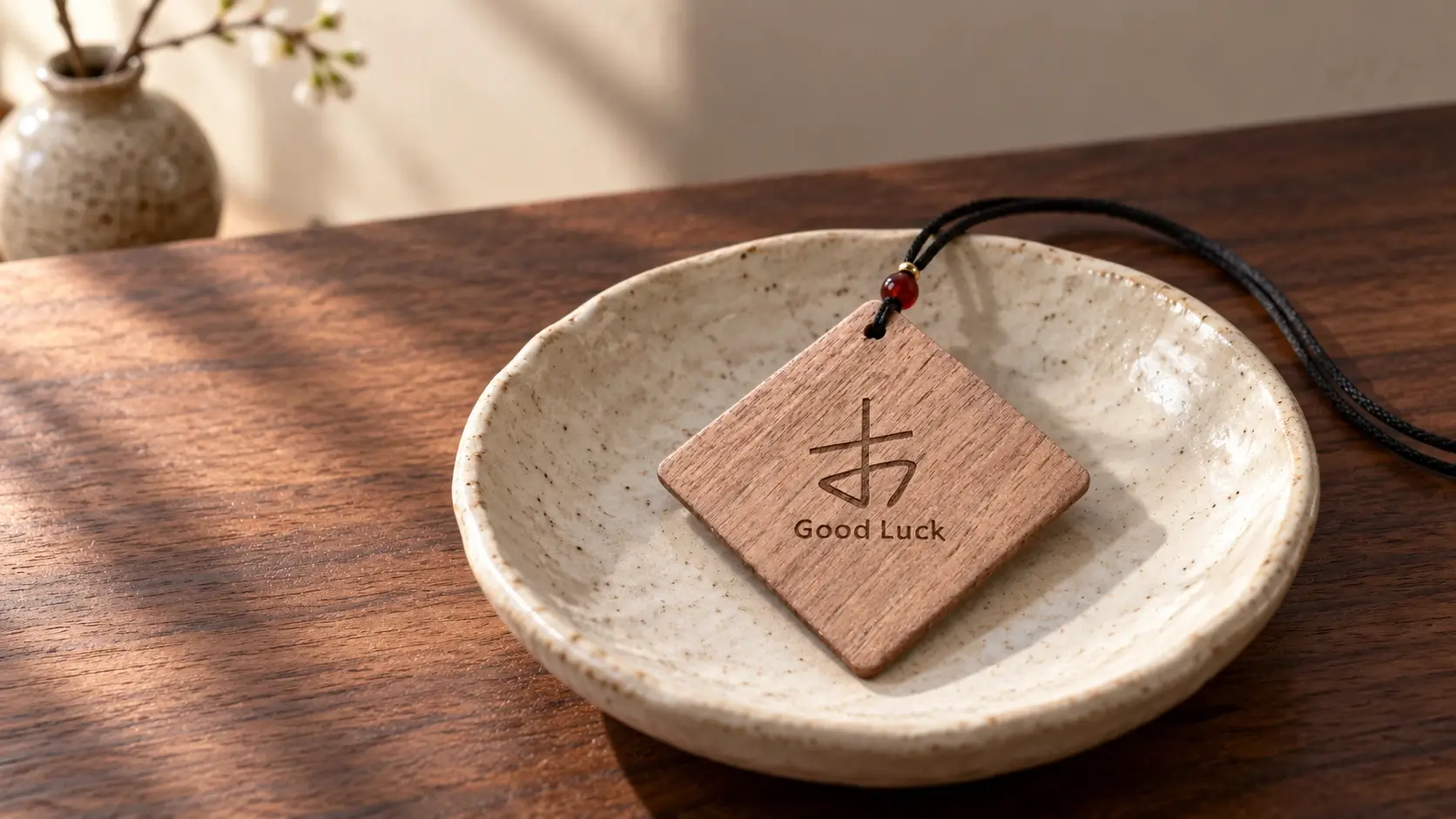
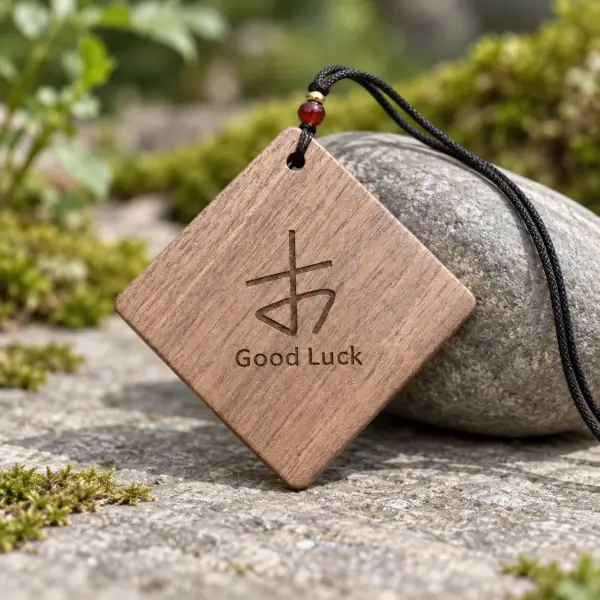
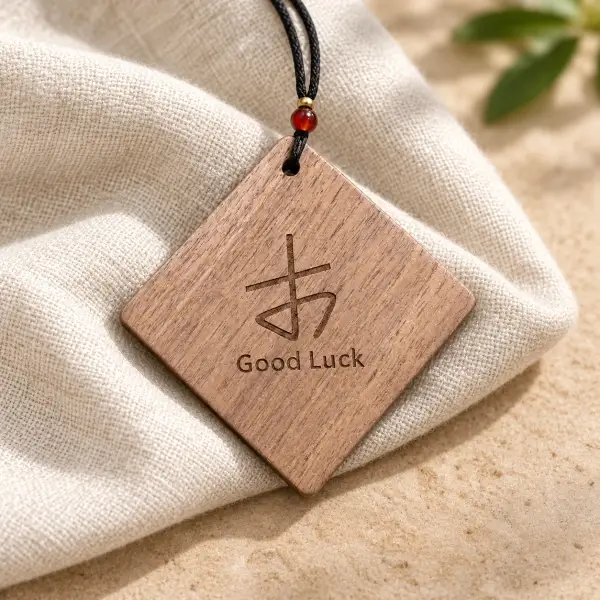
Wood offers visible grain and an understated appearance. It can work especially well with simple clothing and a cord necklace. Look closely at the edges, the opening for the cord, and the finish. Natural variation can be part of its appeal, so product photographs should help set realistic expectations.
Choose the material for its qualities and your preferences. Price, rarity, and impressive descriptions do not establish how much symbolic protection an object provides.
A Wooden Protection Pendant Inspired by Centuries-Old Trees
For someone drawn to forests, a wooden protection pendant offers a way to express that connection through everyday jewelry. A tree can serve as a personal image of patience, endurance, or continuing growth. These are interpretations a wearer may choose, rather than fixed meanings that every tree or wooden object must possess.
Luckytata’s story centers on wooden pieces hung on centuries-old trees as part of the brand’s blessing practice. The connection is presented through nature, wishes, and the symbolic meaning of carrying a blessing.
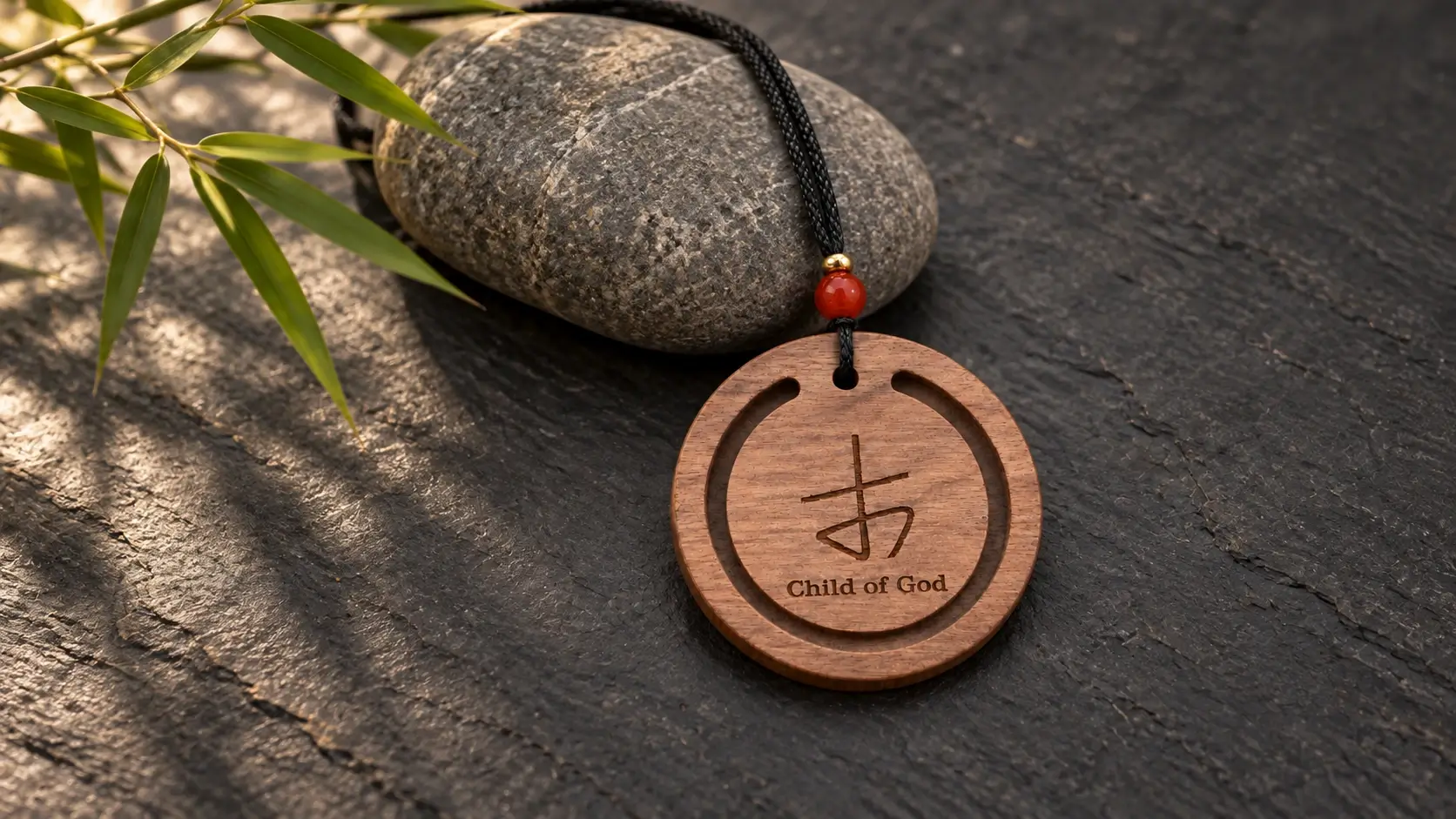
For a specific example, the Luckytata Grooved Circle Pendant is listed as black walnut, with no artificial fragrance added. Its product page explains that standard pieces are hung on centuries-old trees for weeks or months, while custom orders allow a requested hanging duration, with one week as the default.
This gives buyers a concrete story to consider alongside the design. The blessing belongs to the piece’s spiritual and symbolic narrative; it should not be understood as a verified ability to prevent harm.
Make the Pendant Part of an Everyday Intention
You can give a protection pendant a place in your routine without making that routine complicated. Before leaving home, take a moment to remember what it represents. That might be a commitment to move carefully, speak honestly, or keep in touch with someone you love.
Choose an intention that connects with action. If the necklace represents safe travel, let it remind you to prepare thoughtfully. If it marks a fresh start, use it as a cue to approach the day with patience. The meaning becomes clearer when you can describe it in ordinary language.
There is no need to invent a universal activation procedure for every piece. Religious objects may belong to particular practices, and those practices should be understood within their own traditions. A personal keepsake can simply carry the meaning you give it.
Wearing it occasionally is also valid. Its importance does not depend on constant use, and taking it off does not mean abandoning the wish it represents.
Give a Protection Pendant With a Personal Message
A protection pendant can be a thoughtful gift when someone is moving away, beginning a new job, or preparing for a journey. The strongest message is usually specific to that person. Explain why you chose the shape, the material, or the words engraved on it.
Consider the recipient’s beliefs and style before choosing a symbol. Someone who values religious jewelry may appreciate a design connected to their faith. Someone who prefers nature and simplicity may feel closer to a wooden piece with a brief inscription.
Include a note that keeps the promise realistic: “A small reminder that I am thinking of you wherever you go.” That message gives the object a relationship to carry without placing expectations on the recipient.
For personalized orders, check spelling, engraving limits, and production timing before paying. If the gift involves a blessing practice or requested preparation period, allow for that time as well as delivery.
Check the Details Before You Buy
Before purchasing a protection pendant, read beyond the headline and look for practical information. Clear product descriptions make it easier to understand both what you will receive and why the piece may matter to you.
Check the pendant’s measurements against a necklace you already own. Review the cord or chain length, whether it can be adjusted, and what is included in the package. Photographs showing scale are particularly useful when a close-up makes a small piece look large.
Ask how the material should be cared for and whether the seller provides instructions for the finish. Follow those instructions rather than applying a cleaning method intended for a different material. Inspect the cord, clasp, or attachment periodically as part of ordinary jewelry care.
Finally, read the return conditions for standard and personalized pieces. A clear account of materials, customization, and preparation is more useful than a dramatic claim that a particular pendant is the most powerful.
Carry a Meaning That Feels True to You
The right protection pendant brings together a design you enjoy, a story you understand, and an intention you want to remember. History provides valuable context, while your own experiences help determine what a piece means in daily life.
Whether it expresses faith, affection, or a connection with nature, choose something whose meaning you can explain honestly. If wood and tree-inspired blessings speak to you, browse the Luckytata wooden pendant collection with those qualities in mind. The most personal choice is one you can wear comfortably and connect with over time.