A Tree That Stands Before Time
At Tianshi Cave on Qingcheng Mountain, there is an ancient ginkgo tree that does not feel like an ordinary tree. It stands near the Taoist temple halls, surrounded by old stone steps, dark wooden buildings, mountain mist, and the quiet rhythm of visitors coming and going.
Chinese sources often describe this tree as nearly 2,000 years old, with a commonly stated age of about 1,800 years. It is known as the Tianshi Ginkgo, and local tradition connects it with Zhang Daoling, the founder of Taoism, who is said to have planted it during the Eastern Han period. The Qingcheng Mountain Taoist Association describes it as one of Qingcheng Mountain’s treasured ancient trees and one of the symbolic “tree kings” of the region.
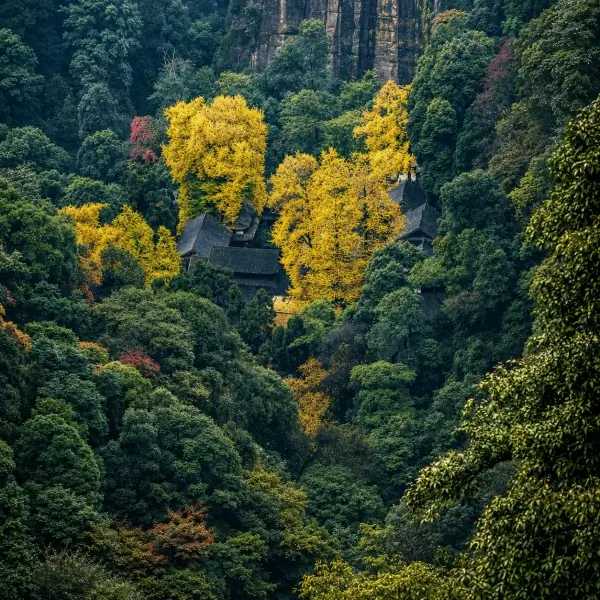
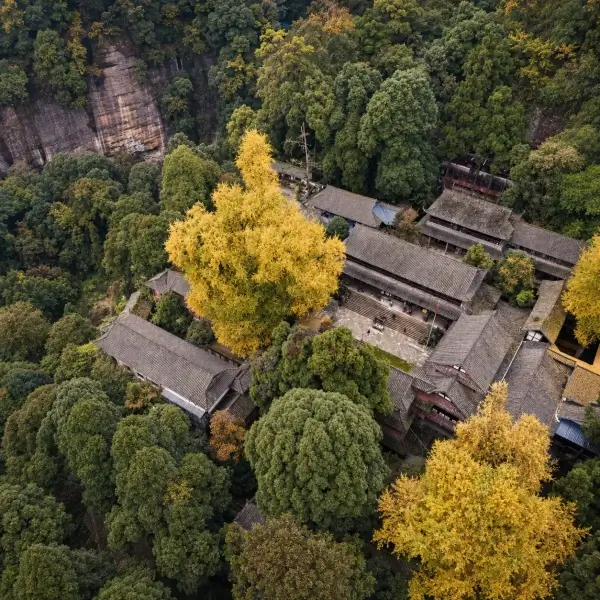
For many visitors, the first impression is not simply its size. It is the silence around it. The tree does not need to explain itself. Its trunk, roots, branches, and hanging red ribbons already speak in a language older than words.
Why This Ginkgo Feels Like a Guardian
A tree that has lived for centuries becomes part of the place around it. It watches dynasties rise and fall, temples repaired and rebuilt, pilgrims arrive and leave, and seasons return again and again. The Tianshi Cave ginkgo has stood through wind, rain, snow, mountain fog, and human change. This is why many Chinese articles describe it not just as a plant, but almost as an elder.
The Chengdu Daily feature describes the ancient ginkgo as a dignified old presence that has endured nearly two thousand years of weather and time. It also records the unusual shape of its trunk, the dense branches stretching like a giant umbrella, and the strange hanging formations known by Taoists as “白果笋,” or ginkgo stalactite-like growths.
This physical form gives the tree a powerful visual presence. Its roots seem to grip the mountain. Its crown rises into the sky. Its branches spread like protection. Even before any spiritual interpretation, the tree naturally creates a feeling of shelter.
That is why the word guardian fits it so well.
Not a guardian that moves. Not a guardian that speaks. But a guardian that remains.
Qingcheng Mountain and the Taoist Meaning of Stillness
Qingcheng Mountain is not just a scenic destination. It is one of the most important Taoist mountains in China. The Qingcheng Mountain Taoist Association explains that Zhang Daoling came to Qingcheng during the Eastern Han period, and the mountain later became one of the major birthplaces of Taoism. Tianshi Cave is also described as a core Taoist site within the mountain’s temple system.
This matters because Taoist culture gives a special meaning to mountains, caves, trees, water, mist, and silence. Nature is not treated as a background decoration. It is part of the path.
In Taoist thought, the deepest wisdom is often not forced. It appears when the mind becomes quiet enough to receive it. A mountain does not argue. A tree does not persuade. Water does not rush when it is not necessary. Everything teaches by being what it is.
The ancient ginkgo of Tianshi Cave belongs to this world of quiet teaching.
The Tree as a Place of Calibration
Many visitors go to sacred places with questions in their hearts. Some come for blessings. Some come for peace. Some come because life has become too loud, too fast, or too complicated.
Standing beneath an ancient tree can create a very simple experience: the mind slows down.
This is the meaning of calibration.
The tree is not giving you an answer in human language. It is not speaking a sentence into your ear. Instead, it offers a stable field of stillness. Its presence reminds your body and mind of something forgotten: you do not always need to chase the answer. Sometimes you need to become quiet enough to hear what was already inside you.
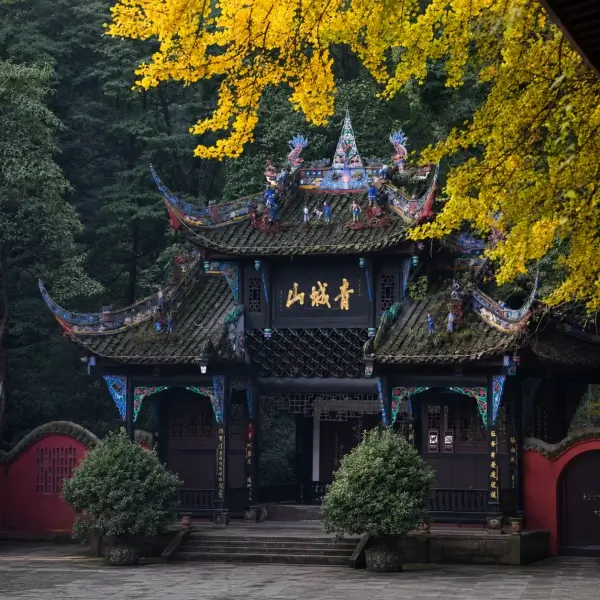
Under the ginkgo, a person may feel the chest loosen. A thought may become clearer. A feeling that was buried may suddenly rise. Some people may even feel tears, not because they are sad, but because something tense has finally softened.
From a spiritual perspective, this is not magic in the dramatic sense. It is alignment.
The old tree has stood in one place for nearly two millennia. Its rhythm is slow. Its presence is deep. When you stand near it, your own inner noise may begin to fall away.
The Red Ribbons and Human Wishes
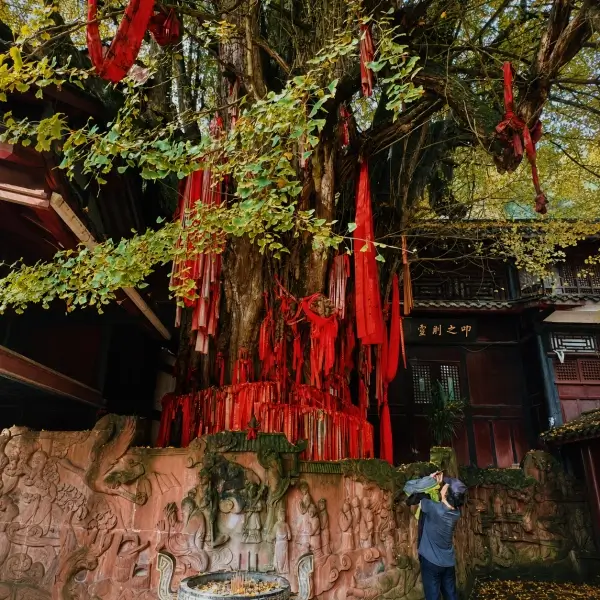
Chinese reports describe red ribbons tied around the tree by visitors who come to pray, give thanks, or express wishes for peace, health, longevity, and protection. The tree is also known in folk belief as “Tianshi Cave Baiguo Daxian,” a reverent name connected with the ginkgo fruit.
This tradition is important because it shows how the tree has become a bridge between nature and human hope.
A ribbon is small. A wish is invisible. But when thousands of people leave their wishes in one place, the tree becomes part of a shared emotional landscape. It carries memory. It carries longing. It carries gratitude.
The tree does not promise that every wish will come true. Its deeper gift is different: it gives people a place to pause, release, and remember what matters.
How to Meet the Ancient Ginkgo
If you visit Tianshi Cave, you do not need to do anything complicated. You do not need to perform a perfect ritual. The most respectful way to meet an ancient tree is also the simplest.
Stand quietly beneath it.
Look at the roots. Look at the trunk. Look at the leaves if it is autumn. Notice how the temple roof bends around the tree, how the mountain air moves through the branches, and how many generations have stood where you are standing now.
Then place your question silently in your heart.
Do not force an answer.
Wait.
The answer may come as a sentence, a picture, a feeling, or only a small sense of relief. That is enough. In Taoist places, clarity often arrives softly.
From Ancient Trees to Personal Blessings
The story of the Tianshi Cave ginkgo also helps explain why ancient trees are powerful symbols in spiritual objects and blessing traditions. A tree is rooted in the earth but open to the sky. It receives rain, sunlight, wind, darkness, and time. It survives by staying connected.
That is why a wooden pendant, a carved token, or a small natural object can feel meaningful when it is connected with the idea of ancient trees. The value is not only in the material. It is in the story it carries: protection, patience, resilience, and quiet strength.
The Tianshi Cave ginkgo reminds us that blessing does not always come from something loud or dramatic. Sometimes blessing is simply the presence of something that has remained steady for a very long time.
A Guardian That Does Not Move
The ancient ginkgo of Tianshi Cave is more than a scenic landmark. It is a living witness of Qingcheng Mountain’s Taoist history, a cultural symbol of protection, and a quiet mirror for anyone who arrives with questions.
It does not move, yet people travel far to find it.
It does not speak, yet many leave with a clearer heart.
It does not chase time, yet time gathers around it.
For nearly two thousand years, this ginkgo has stood at the edge of temple, mountain, and sky. Perhaps that is its greatest teaching: when the world becomes noisy, the deepest strength is not always movement.
Sometimes, the deepest strength is stillness.