The Meaning of the Luckytata Logo
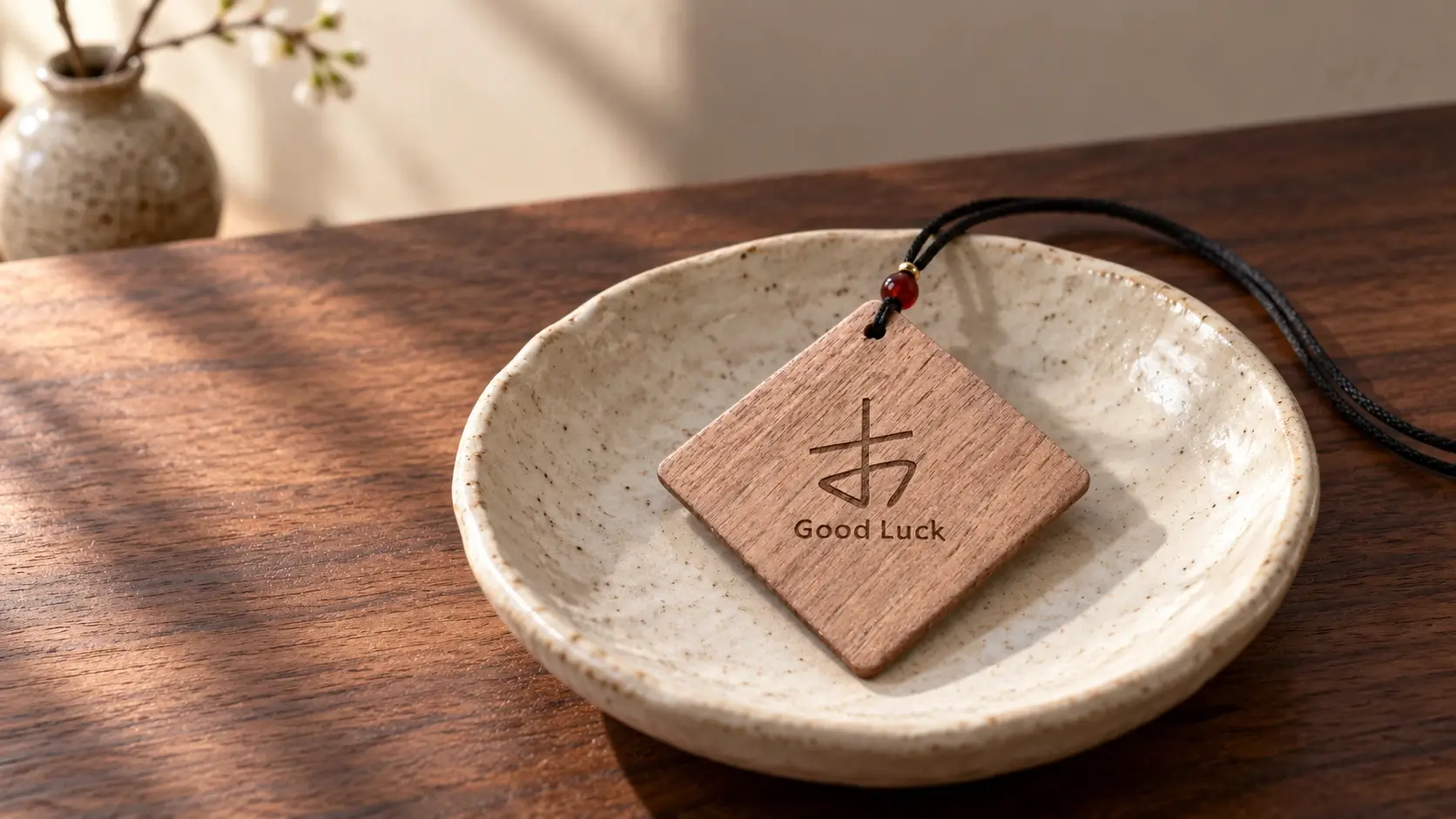
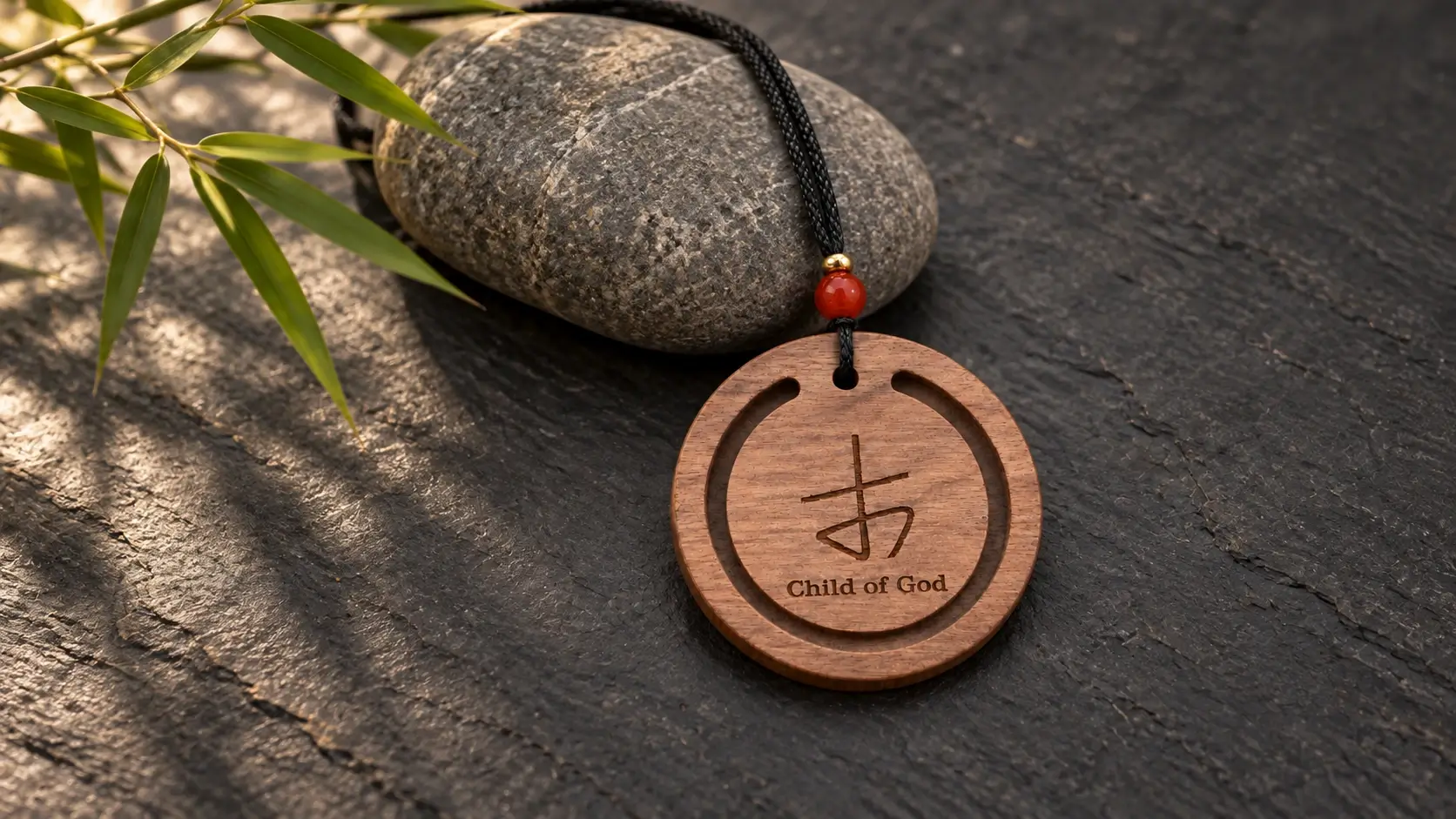
The Luckytata logo meaning begins with one of the oldest and most recognizable Chinese characters: 木, pronounced mù in Mandarin. In English, 木 means “wood” or “tree.” The Luckytata symbol is not a random abstract mark, nor was it created from a Japanese word. It is a modern, connected-stroke interpretation of the Chinese character 木, inspired by the fluid way Chinese characters can appear when written quickly by hand.
This origin connects the logo directly with everything Luckytata represents. Our wooden pendants are made from wood, our stories are centered on ancient trees, and our brand reflects the relationship between people, nature, time, and good wishes. What first appears to be a simple emblem therefore carries thousands of years of writing history and blessings from ancient trees.
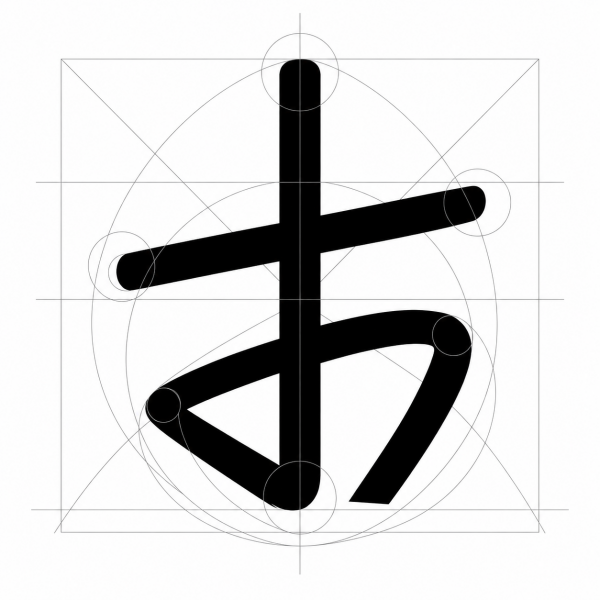
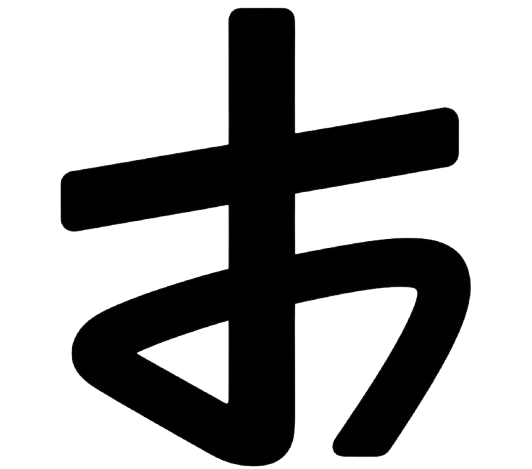
*Luckytata Logo Design
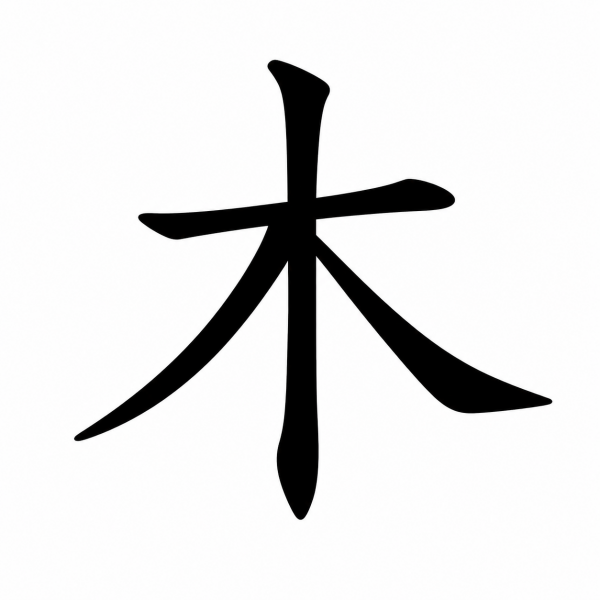
*Modern Written Form of the Chinese Character “木”
Why the Luckytata Logo Meaning Begins with 木
In modern Chinese, 木 is a four-stroke character associated with trees, timber, and wooden materials. It is also a traditional radical used in many characters connected with trees and wood. For example, 林 means “woods,” while 森 means “forest.”
The form of 木 was originally pictographic rather than an arbitrary group of lines. The Chinese University of Hong Kong’s Multi-function Chinese Character Database explains that early oracle-bone and bronze forms depict a tree, with the upper part suggesting branches and the lower part suggesting roots.
A central line resembles the trunk. Strokes extend outward like branches, while the lower form suggests roots spreading into the earth. Even after the character became standardized, this basic image remained visible.
For Luckytata, the structure expresses growth without forgetting origin, movement without losing stability, and individuality supported by a deeper connection to nature.
The Original Picture of a Tree
The earliest surviving body of Chinese writing is found in oracle-bone inscriptions from the late Shang period. These characters were carved into animal bones and turtle shells, often as records connected with divination and royal affairs.
The Rutgers overview of early Chinese writing describes oracle-bone inscriptions as the earliest substantial body of East Asian writing known today.
In these early forms, 木 looked more like a tree than the modern character does. The upper strokes rose and spread like branches, the middle held the form together like a trunk, and the lower strokes extended like roots.
Ancient versions were not always identical. Their shapes varied according to the writing surface, the tool, the historical period, and the writer. A character carved into hard bone could appear straighter and more angular than one written with a brush or prepared for a bronze inscription.
Its proportions changed, but the central image remained recognizable.
This continuity is important to the Luckytata logo meaning. The design reflects more than the modern printed form of 木. It also reflects the older idea behind the character—a living tree standing between earth and sky.
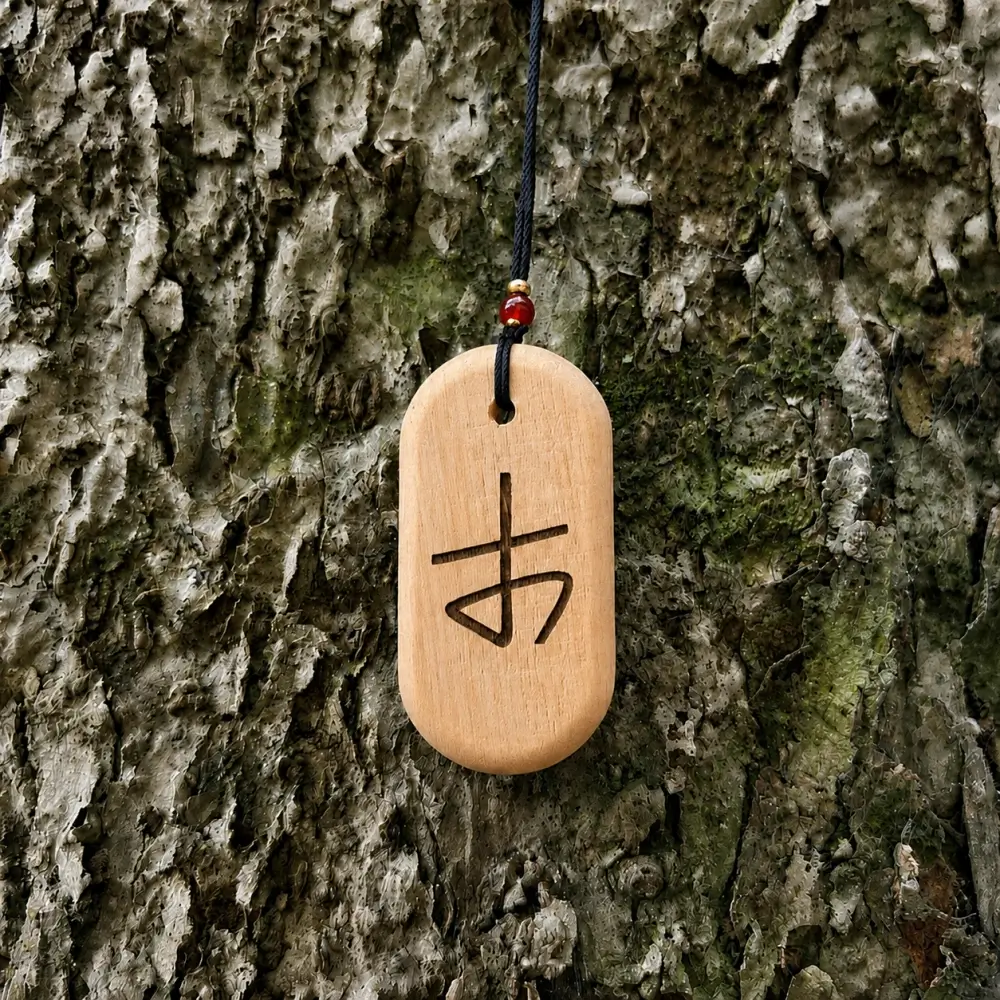
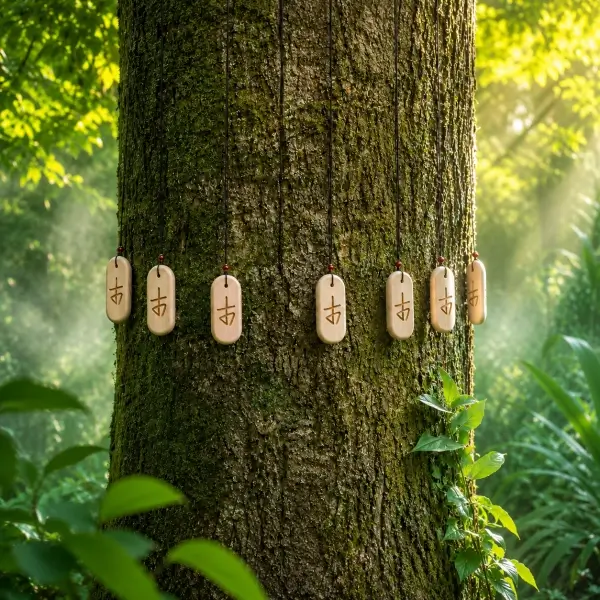
How 木 Evolved Through Ancient Chinese Writing
Chinese writing changed gradually, and different styles sometimes overlapped. However, the development of 木 can be understood through several major stages showing how a picture of a tree became a standardized character and later an expressive handwritten form.
Oracle-Bone Script
In oracle-bone script, 木 retained a clear pictographic structure. The trunk was central, the branches rose above, and the roots spread below.
Because the characters were cut into bone or shell, the lines were often thin, firm, and angular. The limitations of the material influenced how the character appeared, but the shape of a tree could still be recognized.
At this stage, the ancient form joined image and language. It looked like a tree while also functioning as a written word associated with a tree or wood.
Bronze Inscriptions
During the Shang and Zhou periods, characters were also cast or carved onto ritual bronze vessels. Bronze inscriptions could preserve fuller and sometimes more rounded forms than inscriptions cut directly into bone.
木 continued to resemble a tree, but its lines became more balanced and visually organized. The branches, central trunk, and roots remained identifiable, although their proportions varied across different inscriptions.
This stage shows an important development in Chinese writing. The character was becoming more conventional without losing the natural image from which it had developed.
Branches, trunk, and roots were gradually transformed into a stable written structure.
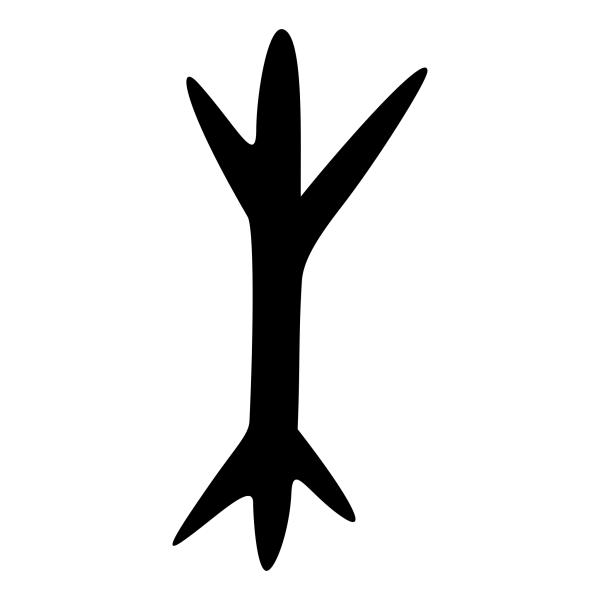
*The Oracle Bone Script Form of “木”
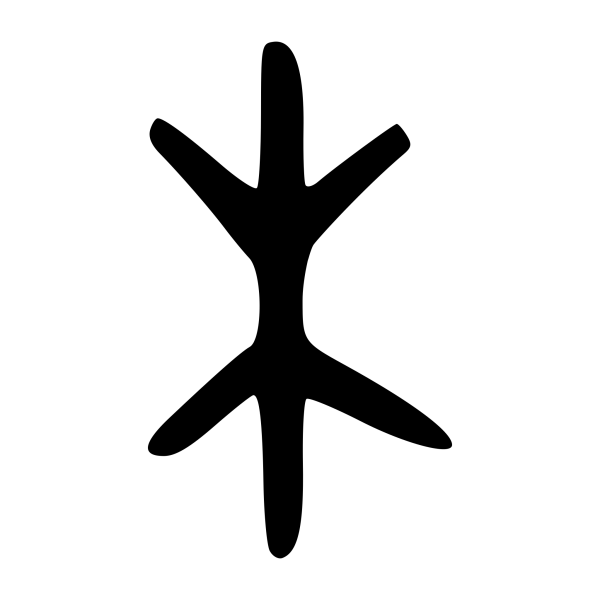
*The Bronze Inscription Form of “木”
Small Seal Script
Small seal script is closely associated with the standardization of writing under the Qin dynasty. Characters in this style were generally elongated, balanced, and composed with controlled curves.
木 became more symmetrical and formal. Its pictorial quality was reduced, but the basic structure of a tree remained within the character.
The Luckytata logo does not directly copy the small seal form. However, this stage is important because it shows how an image from nature was refined into a cultural symbol that could be reproduced consistently.
The tree was no longer simply drawn. It had become an established written character.
Clerical and Regular Script
Clerical script made Chinese writing more practical for administration and everyday use. Strokes became flatter, clearer, and easier to execute. Regular script later established the familiar structure of 木 used in printed and handwritten Chinese today.
In regular script, 木 has four distinct strokes.
The horizontal stroke can be understood as spreading branches. The vertical stroke forms the trunk, while the two diagonal strokes open outward like roots or lower branches.
Although modern 木 is more abstract than the earliest pictographs, the original image becomes clear once its structure is explained.
Running and Cursive Script
Chinese calligraphy also developed running script and cursive script. These styles allow greater speed, rhythm, abbreviation, and connection between strokes.
The Metropolitan Museum of Art explains that running and cursive writing developed as increasingly fluid forms. Characters may be abbreviated, and in highly cursive writing, strokes or even separate characters may be joined in one continuous movement of the brush.
This calligraphic tradition is the closest visual inspiration for the Luckytata emblem.
When 木 is written quickly, the hand does not always stop after every formal stroke. Lines can meet, turn, and continue. Separate strokes may appear to become one flowing movement.
The result may look unfamiliar to someone who knows only the printed form of 木, but it still grows from the same Chinese character.
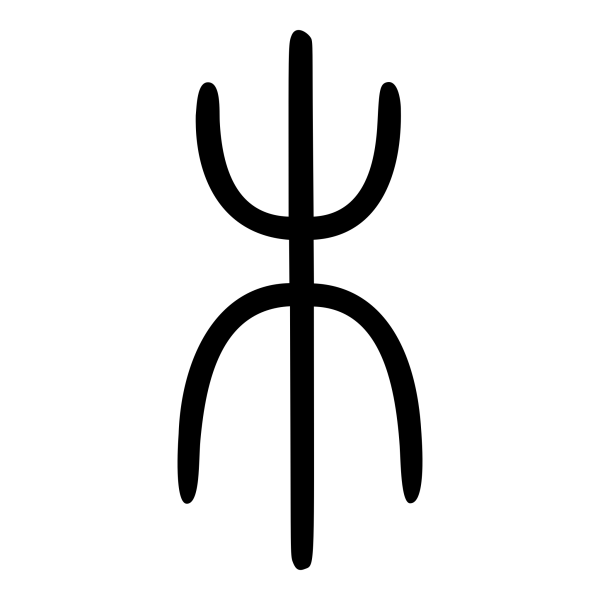
*The Small Seal Script Form of “木”
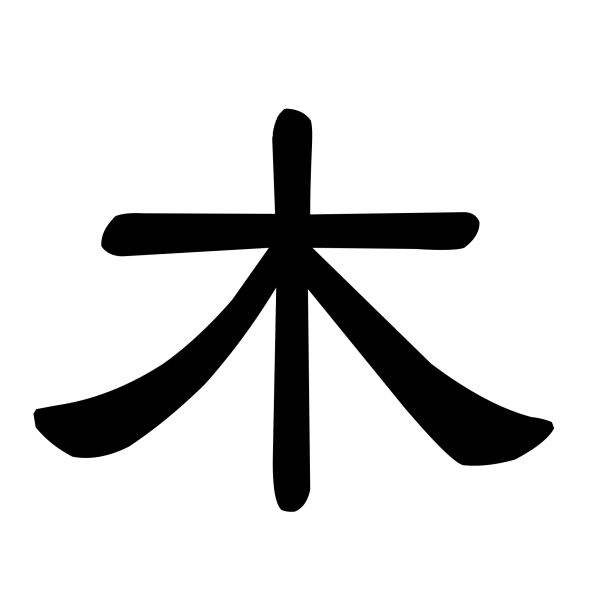
*The Clerical Script Form of “木”
How a Handwritten 木 Became the Luckytata Logo
The Luckytata logo is a contemporary design based on the connected movement of handwritten Chinese.
It is not intended to reproduce one exact oracle-bone, bronze, seal-script, or historical cursive specimen. Instead, it brings the long history of 木 into a clean symbol suitable for a modern international brand.
The long central movement preserves the idea of the trunk. The crossing and outward lines recall branches. The connected lower form gives the mark weight and grounding, suggesting roots as well as the natural outline of a wooden pendant.
Connected strokes also make the logo feel personal.
Printed type is precise and repeatable, while handwriting preserves movement. A handwritten line records the direction, speed, and rhythm of the person who made it. Even a simple character can reveal where the hand paused, turned, or continued.
By using a fluid version of 木, Luckytata keeps a sense of human touch within a minimal visual identity.
The Luckytata logo meaning is therefore connected not only with the character itself but also with the act of writing. The emblem is both a recognizable sign and a gesture made by the hand.
Why the Symbol Is Chinese Rather Than Japanese
Some viewers outside East Asia may first assume that the Luckytata emblem is Japanese.
This misunderstanding is understandable because Chinese characters were historically adopted and adapted in Japan, where they are known as kanji. 木 is still used in written Japanese and can also carry meanings related to trees and wood.
However, the historical origin of the character is Chinese.
Chinese characters developed in ancient China long before their transmission to Japan and other parts of East Asia. A Williams College program on the history of East Asian writing notes that Chinese characters originated in China more than 3,000 years ago and were later adapted by neighboring cultures.
It is therefore most accurate to describe the Luckytata symbol as a stylized Chinese character.
The later use of 木 in Japanese writing does not make the character Japanese in origin. In the context of Luckytata, the pronunciation, cultural reference, design story, and intended meaning all begin with the Chinese 木, pronounced mù.
This clarification is not intended to deny the shared history of written characters across East Asia. It simply identifies the specific source of the Luckytata brand identity.
The logo is based on a Chinese character transformed through modern connected-stroke design.
Wood as Material and Tree as Memory
The word “wood” describes a material, but 木 also points back to the living tree from which wood comes. That relationship is central to Luckytata.
Wood records time through grain, tone, texture, and natural variation. No two pieces are perfectly identical. Each wooden pendant carries visible evidence of organic growth, even after it has been shaped, polished, and engraved.
A line in the grain may reflect years of slow growth. A change in tone may show how the tree responded to different seasons and environmental conditions. These natural variations are not imperfections. They are part of the identity of the material.
Luckytata extends this connection by placing wooden pendants in contact with ancient trees for a period of time before they continue their journey to their owners.
During this process, each pendant becomes part of a quiet moment between wood, tree, time, and nature. Some ancient trees have stood for hundreds or even thousands of years, witnessing seasons, people, prayers, and changes in the world around them. Luckytata hopes to carry blessings from these centuries-old and even thousand-year-old trees to its owners, aiming to bring luck, protection, resilience, and inner peace into everyday life.
This practice reflects respect for age, endurance, and the quiet presence of trees. More of this setting appears in Luckytata Birthplace, where ancient temples, historic landscapes, and old trees come together.
The logo gives this story a single visual center. 木 identifies the material, recalls the living tree, and connects the product with an older cultural understanding of nature. Through this symbol, the Luckytata logo becomes more than a mark of wood. It becomes a reminder of ancient trees, natural blessings, and the brand’s wish to bring good luck to every owner.
The Logo and the Luckytata Brand Story
Luckytata is built around more than a wooden object.
The brand explores how people remember places, carry wishes, and create personal connections with nature. A pendant can become a reminder of patience, resilience, protection, love, or good fortune.
The Luckytata logo meaning supports this story in several layers.
First, 木 refers directly to the wood used in the pendant.
Second, its pictographic origin represents the complete tree, including branches above and roots below.
Third, its long written history introduces the dimension of time. The character has changed across generations, but its fundamental connection with trees has remained.
Finally, its connected handwritten form gives the mark warmth, motion, and individuality.
These layers connect the logo with the wider purpose of the brand. The story continues through Planting Trees for Tomorrow, Luckytata’s long-term tree-planting initiative, and through the stories collected in the Luckytata Library.
The logo can therefore be read as a compact expression of the entire brand:
Born from wood, inspired by trees, shaped by time, and carried from one person to another.
What the Luckytata Logo Meaning Represents Today
The Luckytata logo began with 木, an ancient Chinese pictograph of a tree.
Across oracle-bone inscriptions, bronze writing, seal script, regular script, and fluid calligraphy, the character changed in appearance while preserving its relationship with trees and wood.
Luckytata transforms that history into a connected, modern emblem.
It is not Japanese in origin, and it is not an invented abstract symbol. It is a stylized handwritten Chinese character chosen because its language, shape, and history belong naturally to the brand.
Today, the Luckytata logo meaning can be expressed through a few simple ideas: wood as a natural material, the tree as a living source, roots as connection, growth as hope, and handwriting as the trace of a human hand.
Every time the logo is engraved on a Luckytata pendant, an ancient character begins a new journey.
It moves from early images of trees to modern design, from nature to craftsmanship, and from the story of the brand to the personal story of the person who wears it.