How to Recognize Them
Trees are everywhere in our daily lives. They stand beside roads, grow in parks, shade schoolyards, decorate old streets, and quietly change with the seasons. Yet many people walk past them every day without knowing their names. Learning about common trees is a simple but meaningful way to understand nature better. It can make a walk more interesting, help children build curiosity, and even give us a deeper appreciation for the world around us.
In this guide, we will introduce 11 common trees that many people can see in cities, villages, gardens, and parks. Some are known for their shade, some for their flowers, some for their fruits, and some for their cultural meaning. Once you know how to recognize them, the trees around you will no longer feel silent or ordinary.
Why Learning About Common Trees Matters
Recognizing trees is not only a botanical skill. It is also a way to connect with nature. A tree’s leaves, bark, crown shape, flowers, fruit, and seasonal changes all tell a story. When you know what you are looking at, a normal street suddenly becomes more alive.
Trees also carry cultural meanings. In many traditions, pine trees symbolize strength, willow trees represent farewell and tenderness, peach trees are connected with blessings and longevity, and ginkgo trees often remind people of time, endurance, and autumn beauty.

1. Poplar Tree
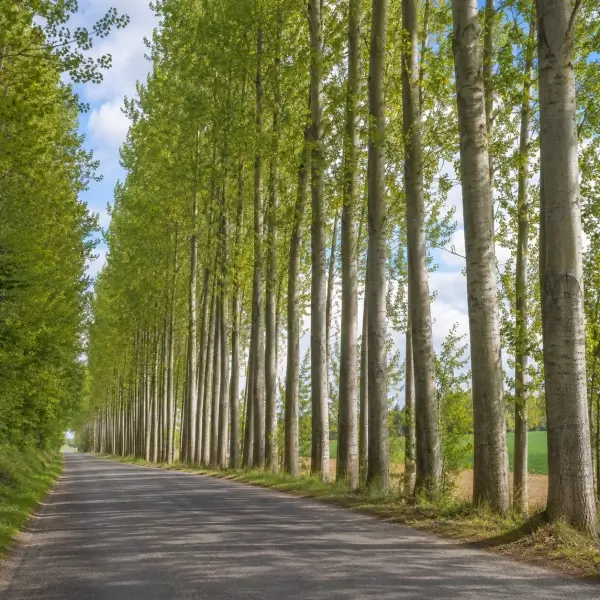
The poplar tree is one of the most familiar roadside trees. It often grows tall and straight, with a clean trunk and a simple, upright shape. Many poplars have pale gray or whitish bark, making them easy to notice from a distance.
Poplars are often planted along roads, rivers, and open spaces because they grow quickly and provide shade. Their leaves move easily in the wind, creating a soft rustling sound. Compared with many other trees, poplars usually give people a feeling of strength, order, and openness.
If you want to recognize a poplar, look for a tall, straight trunk, a relatively narrow crown, and leaves that often tremble in the breeze.
2. Mulberry Tree
The mulberry tree is usually not as tall and straight as a poplar, but it has a fuller and more relaxed appearance. Its branches often spread widely, and its leaves are dense, creating a rich green canopy in spring and summer.
Mulberry trees are also closely connected with traditional life because their leaves are well known as food for silkworms. In many places, the mulberry tree represents farming, family life, and the quiet rhythm of the countryside.
The fruits of some mulberry trees are small, soft, and dark when ripe. Birds love them, and people often remember the sweet taste of mulberries from childhood. To recognize a mulberry tree, look for dense leaves, spreading branches, and sometimes small berry-like fruits in season.
3. Ginkgo Tree
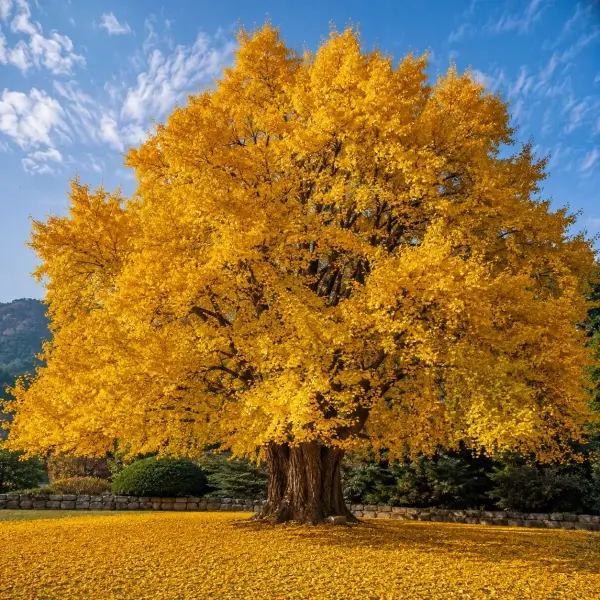
The ginkgo tree is one of the most beautiful trees in autumn. Its fan-shaped leaves turn bright golden yellow, making it stand out even among many colorful fall trees. A row of ginkgo trees can turn an ordinary street into a golden pathway.
Ginkgo trees grow slowly, but they can live for a very long time. They are also famous for their unique leaves, which are unlike most other common trees. Another interesting fact is that ginkgo trees have male and female trees. Female trees can produce seeds with a strong smell when ripe, so many urban plantings prefer male trees.
To recognize a ginkgo, focus on the leaf shape. The fan-shaped leaf is the clearest sign. In autumn, the golden color makes it even easier to identify.
4. Pine Tree
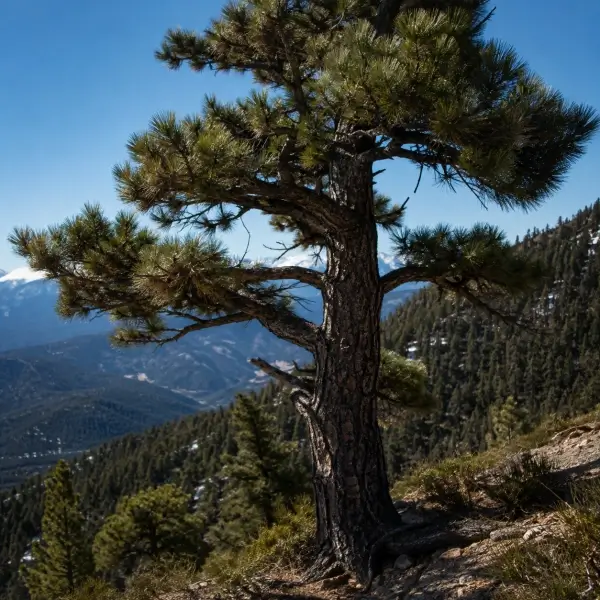
The pine tree is often seen as a symbol of resilience. Unlike many broadleaf trees, pines usually have needle-like leaves and remain green throughout the year. Their strong trunks and evergreen appearance give them a firm, calm, and enduring character.
Pine trees grow in many different environments, from mountains to gardens. Some are tall and majestic, while others are shaped by wind and weather into dramatic forms. In poetry and painting, pine trees are often associated with courage, longevity, and moral strength.
To recognize a pine tree, look for needle-like leaves, woody cones, and a strong evergreen crown. Even in winter, when many trees lose their leaves, pines often remain green.
5. Pagoda Tree
The pagoda tree, also known as the scholar tree or Chinese scholar tree, is a graceful deciduous tree often used in streets, courtyards, and gardens. It has compound leaves and a broad crown, giving it a soft and elegant look.
In many cities, pagoda trees are valued for shade. Their flowers are usually pale yellow or creamy white and can appear in late summer. This makes them different from many spring-flowering trees. The flowers can also attract bees, making the tree useful for urban ecology.
To recognize a pagoda tree, look for its compound leaves, broad crown, and clusters of small flowers when in bloom. It often has a dignified, old-street feeling, especially when planted along historic roads.
6. Peach Tree
The peach tree is loved for both its flowers and its fruit. In spring, peach blossoms appear in shades of pink, red, or white. They bring a soft, romantic feeling to gardens and countryside landscapes.
After flowering, peach trees produce peaches, which are sweet, fragrant, and rich in cultural meaning. In Chinese tradition, peaches are often connected with longevity, blessings, and good fortune. That is why peach imagery is commonly used during birthdays and festive occasions.
Peach trees are usually not as tall as poplars or pines. To recognize one, look for spring blossoms, narrow leaves, and rounded fruit during the growing season. A blooming peach tree is one of the clearest signs that spring has arrived.
7. Pear Tree
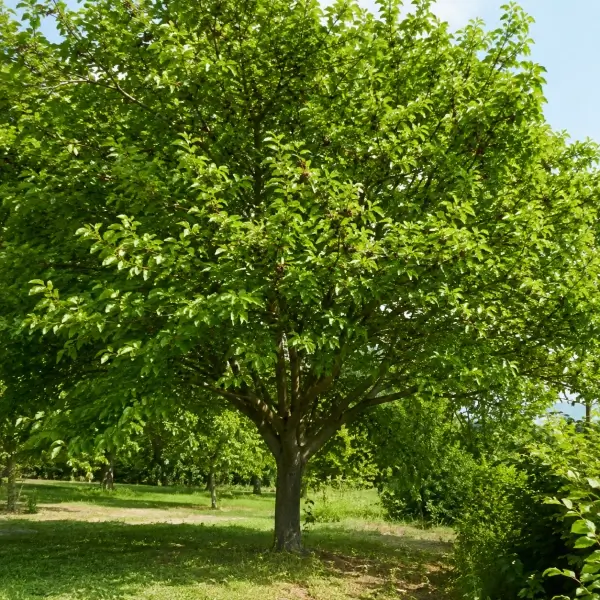
The pear tree is another fruit tree that is easy to appreciate. In spring, pear trees often bloom with white flowers, creating a fresh and clean appearance. When many pear trees bloom together, the scene can look like snow covering the branches.
Pear trees are valued for their fruit and their seasonal beauty. They generally prefer good sunlight and suitable soil. In orchards, pear trees can produce fruit for many years when cared for properly.
To recognize a pear tree, look for white blossoms in spring, oval leaves, and pear-shaped fruit later in the season. Compared with peach blossoms, pear blossoms often look cleaner, lighter, and more elegant.
8. Camphor Tree
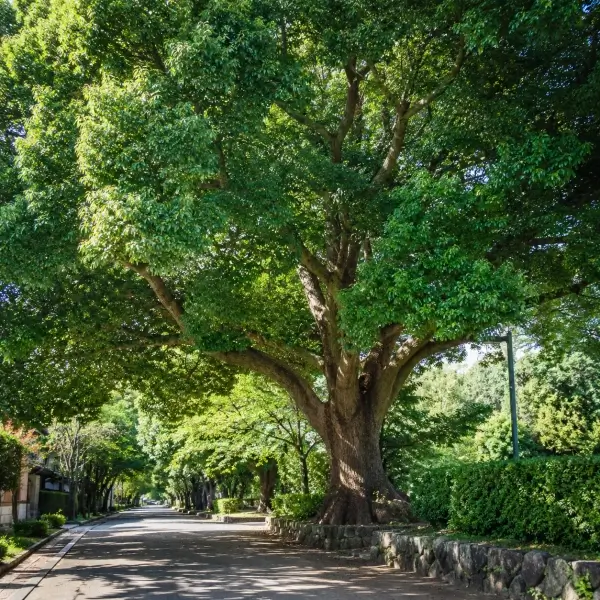
The camphor tree is a common evergreen tree in warm and humid regions. It has a large crown, dense leaves, and a fresh fragrance when the leaves or wood are crushed. Because of its strong shade and evergreen nature, it is often planted as a street tree or landscape tree.
Camphor trees can make a street feel cool and peaceful. Their branches spread widely, and their leaves stay green through the year, making them especially valuable in urban environments.
To recognize a camphor tree, look for glossy evergreen leaves, a broad crown, and a light aromatic scent. In southern cities, it is one of the most familiar shade trees.
9. Fir and Redwood-Like Trees
In everyday language, people often use names like fir, cedar, or redwood-like trees to describe tall coniferous trees with straight trunks and orderly shapes. Some are evergreen, while others, such as dawn redwood, are deciduous conifers that lose their leaves in winter.
These trees often appear in parks, gardens, scenic areas, and forest landscapes. They usually have a neat, upright form and can create a calm, solemn atmosphere. Because of their height and structure, they are often used in landscape design.
To recognize these trees, pay attention to their straight trunks, fine leaves or needles, and layered branches. Compared with broadleaf trees, they often look more structured and formal.
10. Willow Tree
The willow tree is one of the most poetic trees. Its long, soft branches hang down like green ribbons, especially near rivers, lakes, and ponds. In spring, willow trees bring a feeling of movement, softness, and renewal.
Willows often prefer moist places, which is why they are commonly seen near water. In Chinese culture, willow branches are associated with farewell, memory, and gentle emotion. A willow beside water can make a landscape feel peaceful and emotional.
To recognize a willow tree, look for drooping branches, narrow leaves, and a graceful shape. When the wind blows, the moving branches make the tree appear almost alive.
11. Chinese Parasol Tree
The Chinese parasol tree, often called wutong in Chinese, has a tall and elegant shape. Its trunk can be straight and smooth, and its broad leaves create a light, open canopy. In literature, the wutong tree is often connected with autumn, solitude, and quiet beauty.
This tree is especially memorable because of its cultural atmosphere. It does not always look as dense as a camphor tree or as dramatic as a willow, but it has a refined and poetic character.
To recognize a Chinese parasol tree, look for a straight trunk, broad leaves, and an open crown. It is the kind of tree that becomes more beautiful when you know its story.
How to Recognize Trees More Easily
If you want to identify common trees, start with five simple details.
First, look at the leaves. Are they broad, narrow, fan-shaped, needle-like, or compound? Second, observe the bark. Is it smooth, cracked, gray, green, dark, or peeling? Third, notice the crown shape. Is the tree upright, round, spreading, or weeping? Fourth, check for flowers or fruit. These can be strong clues in spring and summer. Finally, pay attention to the location. Some trees prefer water, some like sunny roadsides, and some grow better in warm southern regions.
Tree identification becomes easier with practice. The more you observe, the more familiar each tree becomes.