The Global Tree Crisis
Trees are often seen as quiet background figures in the story of life. They stand in forests, shade cities, protect soil, store carbon, and support countless forms of life. Yet behind this familiar image, the global tree population is facing a serious crisis. Scientific research now shows that the world may hold far more tree species than previously known, but many of them are rare, poorly studied, or already threatened by human activity.
The crisis is not only about how many trees are being cut down. It is also about how many tree species may disappear before people fully understand their names, ecological roles, or cultural value. From undiscovered species hidden in tropical forests to documented species now listed as threatened, the condition of the world’s trees reveals a deeper challenge: humanity is losing part of Earth’s living foundation.
Tree Species
A major global study published in PNAS estimated that Earth may have about 73,274 tree species, a number higher than earlier global estimates. This matters because tree diversity is not simply a statistic. Every tree species can represent a unique role in an ecosystem, supporting insects, fungi, birds, mammals, soil organisms, and human communities.
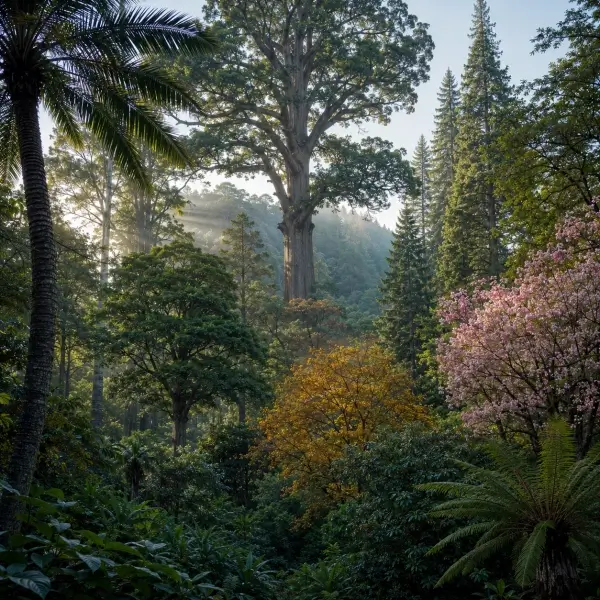
The highest tree diversity is concentrated in tropical and subtropical regions, especially South America. These regions are also where many forests face intense pressure from agriculture, fire, infrastructure, and land conversion. In other words, the richest libraries of tree life are often located in the same places where forest ecosystems are being disturbed most rapidly.
This changes the way we should think about conservation. Protecting trees is not only about planting more seedlings. It is also about protecting the full range of tree species, especially rare and native species that cannot easily be replaced once lost.
Unnamed by Science
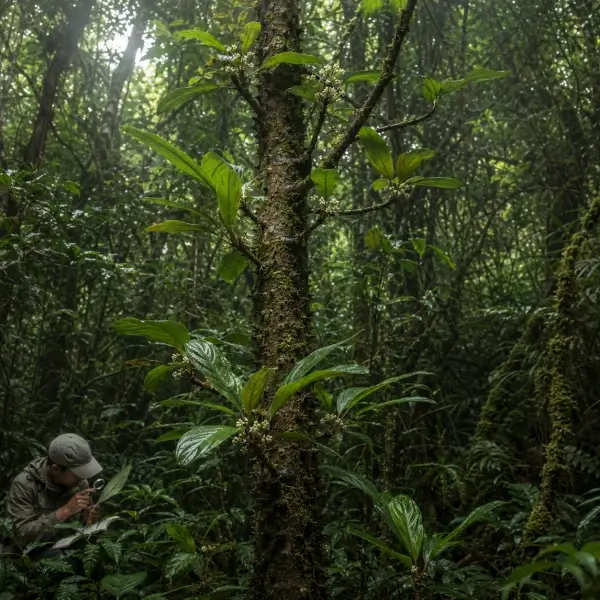
The same global estimate suggests that about 9,186 tree species may still be unknown or undescribed by science. Many of these are expected to be rare, geographically restricted, and located in tropical or subtropical areas.
This is one of the most important points in the global tree crisis. Some trees may be disappearing before they are ever formally named. A species that has not been scientifically described may receive little legal protection, limited research attention, and almost no public awareness. It can vanish silently, without ever entering conservation plans.
Unnamed tree species also remind us that forests are not fully understood systems. They are not just green areas on a map. They are living networks filled with relationships we are still discovering. When old forests are cleared, the loss may include species, genetic diversity, and ecological functions that science has not yet recorded.
Classified as Threatened
BGCI’s State of the World’s Trees report found that around 30% of tree species are threatened with extinction, with about 17,500 tree species at risk. More recently, the IUCN Red List Global Tree Assessment reported that 38% of the world’s assessed tree species are at risk, with at least 16,425 of 47,282 assessed tree species facing extinction risk.
The exact numbers vary because reports use different assessment scopes and timelines, but the message is consistent: a very large share of the world’s tree diversity is under pressure.
The main causes are familiar but powerful: land-use change, agriculture, logging, urban expansion, invasive pests and diseases, and climate change. On islands and in tropical regions, risks can be especially high because many tree species have small natural ranges. Once their habitat is damaged, there may be nowhere else for them to go.
This makes tree conservation more urgent than ordinary forest planting. A restored landscape should not only increase green cover; it should also protect threatened native species and rebuild ecological diversity.
Extinct
At least 142 tree species have already been recorded as extinct, according to BGCI’s global tree conservation work. This number is more than a historical note. It is a warning that tree extinction is not theoretical; it has already happened.
Tree extinction can be slower and less visible than the extinction of animals, but its impact can be deep. When a tree species disappears, the loss can affect pollinators, seed dispersers, fungi, insects, birds, and local communities that once depended on it. Some tree species are connected to traditional medicine, food, tools, rituals, or regional identity.
The extinction of a tree also removes a genetic solution from the future. A rare tree may carry traits that help it survive drought, disease, heat, or poor soils. Losing that species means losing potential resilience at a time when forests need more resilience, not less.
Forest Loss
The image’s figure of about 100 million hectares of forest loss over two decades is broadly consistent with FAO’s net forest-loss trend. FAO reported global net forest loss of about 5.2 million hectares per year from 2000 to 2010 and 4.7 million hectares per year from 2010 to 2020. Together, those two decades equal roughly 99 million hectares of net forest loss
This number is difficult to imagine. It is not just a loss of trees, but a loss of habitat, carbon storage, water regulation, soil protection, and climate stability. Forest loss also fragments landscapes, leaving remaining tree populations isolated and more vulnerable to fire, drought, pests, and genetic decline.
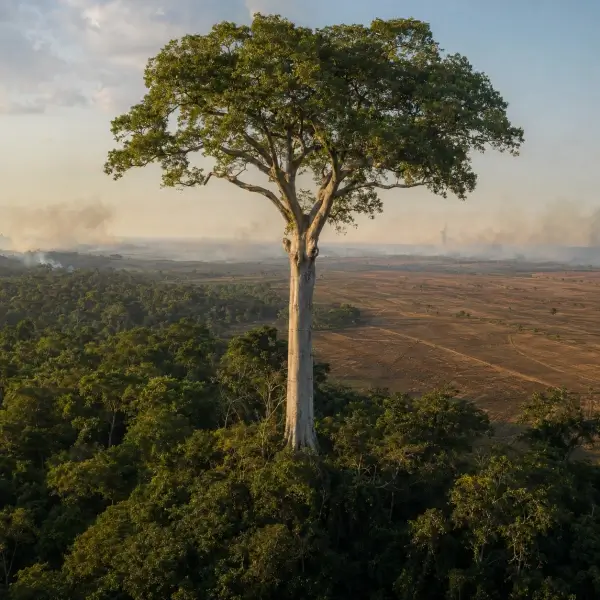
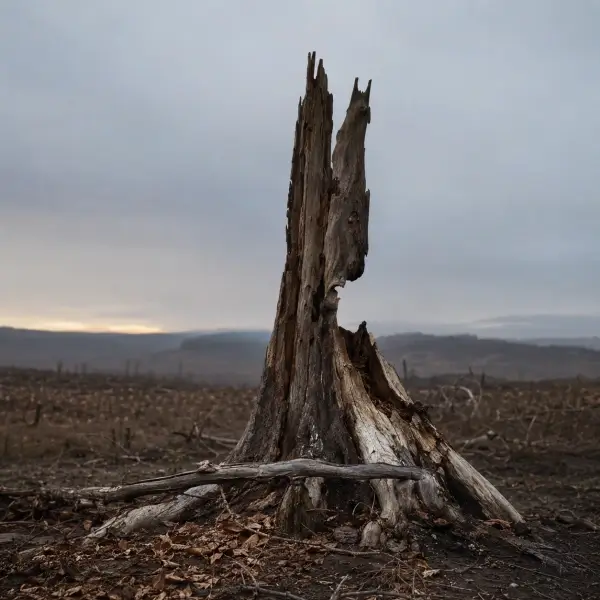
FAO’s 2025 update shows that the annual rate of net forest loss has continued to decline, reaching about 4.12 million hectares per year for 2015–2025. However, the same report also notes that deforestation still continues at about 10.9 million hectares per year, meaning the global forest system remains under heavy pressure.
So the trend contains both hope and danger. The rate of loss has slowed, but the scale of loss is still too large.
Tropical Forest Vanish
The figure of approximately 4.7 million hectares per year is best understood as FAO’s global net forest-loss estimate for 2010–2020, rather than a precise tropical-only number. For tropical forests specifically, recent satellite-based data from WRI and Global Forest Watch shows how severe the situation remains. Tropical primary rainforest loss reached 6.7 million hectares in 2024, the highest level in at least two decades, largely driven by extreme fires. In 2025, tropical primary forest loss fell to 4.3 million hectares, but that still represented a major loss of some of the planet’s most important ecosystems.
Tropical forests matter because they hold exceptional biodiversity. They store carbon, regulate rainfall, cool landscapes, and support Indigenous and local communities. When tropical primary forests are lost, they cannot be quickly replaced by plantations or young secondary growth. A newly planted forest may be valuable, but it does not immediately recreate the complexity of an ancient rainforest.
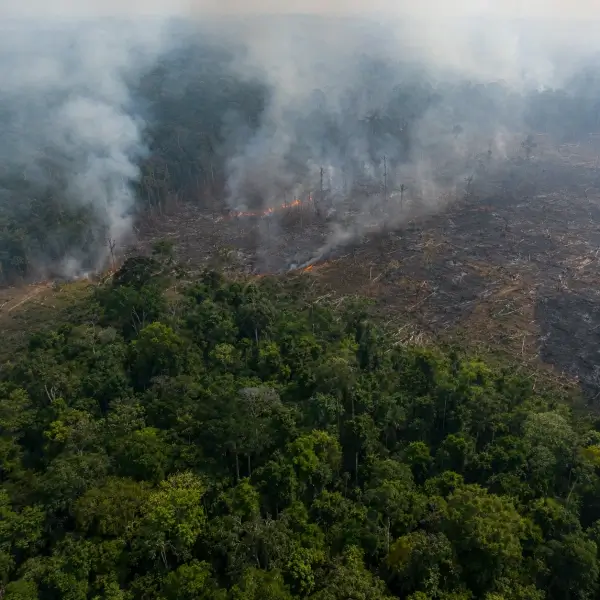
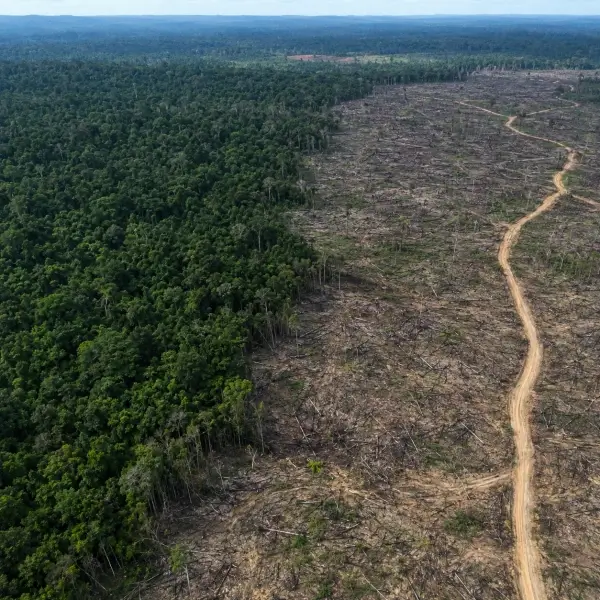
The global tree crisis therefore has two connected sides. One side is species extinction: the loss of unique tree lineages. The other side is forest disappearance: the loss of the living systems where those species survive. Real restoration must address both. It should protect old forests, restore degraded land, support native tree diversity, reduce destructive land conversion, and recognize trees not as decoration, but as living infrastructure for the planet.
Trees have always been symbols of time, patience, and renewal. But the current crisis shows that renewal is not automatic. It depends on choices made by governments, businesses, communities, and individuals. The future of the world’s trees will not be decided only by how many trees we plant, but by whether we protect the diversity, age, and ecological depth of the forests that remain.