European Chestnut Trees Sustain People and Wildlife
The European chestnut has a place in both the forest and the kitchen. Known scientifically as Castanea sativa, this generous tree produces edible nuts, useful timber, and flowers that attract insects. Its story connects the changing seasons with the everyday lives of people who have gathered, grown, and cooked its fruit for generations.
A chestnut grove offers more than an autumn harvest. Beneath its spreading branches, animals search for food, fallen leaves return to the soil, and seeds begin the uncertain journey towards becoming trees. Looking closely at this species reveals how one tree can support so many different forms of life.
What Makes the European Chestnut Recognizable
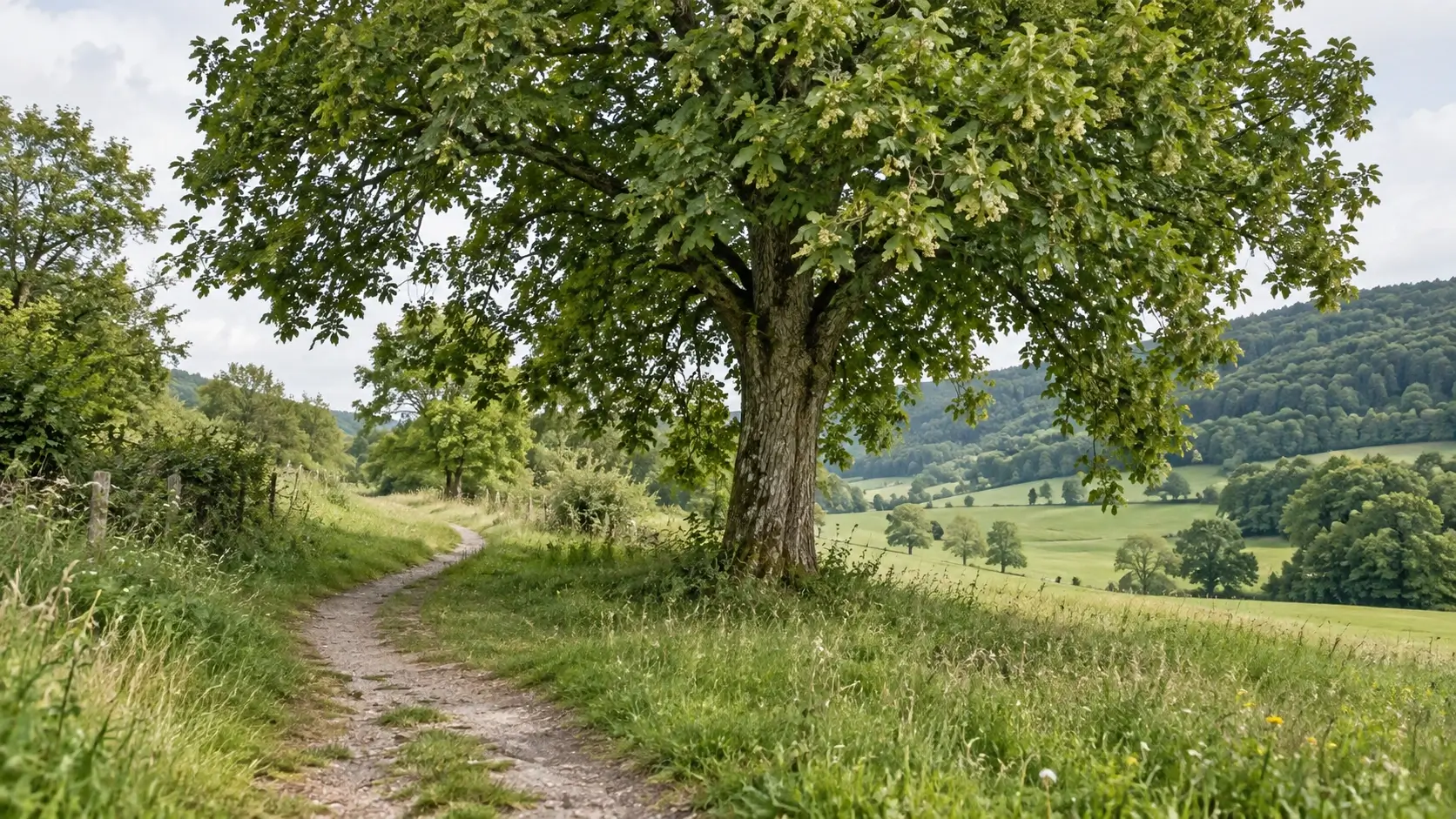
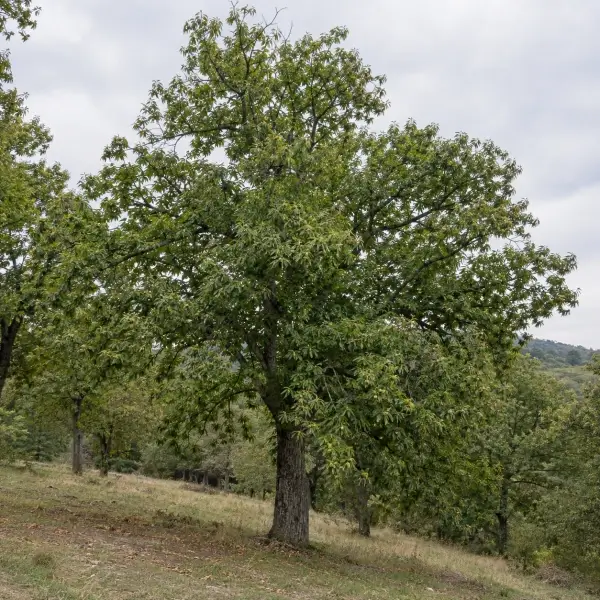
A member of the beech family, Fagaceae, this deciduous tree commonly reaches around 25–30 metres. Mature specimens develop substantial trunks and broad crowns. Older trees may become hollow, giving them the weathered appearance associated with long-established groves.
The leaves grow alternately along the branches. They are long, glossy, and pointed, with a clearly toothed outline. Their shape gives the summer canopy a distinctive texture, especially when sunlight catches the upper surfaces.
Bark changes as the tree ages, becoming deeply furrowed. These grooves can twist around the trunk rather than following perfectly straight lines.
Longevity deserves particular attention. A lifespan of 50–100 years understates the tree’s potential. The Woodland Trust describes specimens living for up to 700 years, so several centuries is a more appropriate way to explain its capacity for long life. Its sweet chestnut identification guide also distinguishes the species from horse chestnut, whose leaves have a very different, hand-like arrangement.
Where the Tree Finds Suitable Ground
The European chestnut is strongly associated with southern European landscapes, but its wider story includes western Asia and North Africa. Centuries of planting and cultivation have complicated the boundary between its original distribution and the places where people introduced it.
According to EUFORGEN’s species profile, it favours well-drained soils and temperate conditions with sufficient rainfall. Its elevation range varies, making a universal limit of 800 metres misleading.
Acidic soils are an important part of its familiar mountain habitat. However, describing a suitable site requires more than an altitude figure. Moisture, drainage, and local climate all influence the conditions a tree experiences.
For readers interested in the variety of places trees call home, Luckytata’s tree stories provide a natural next step beyond this species.
Summer Flowers Become Autumn Chestnuts
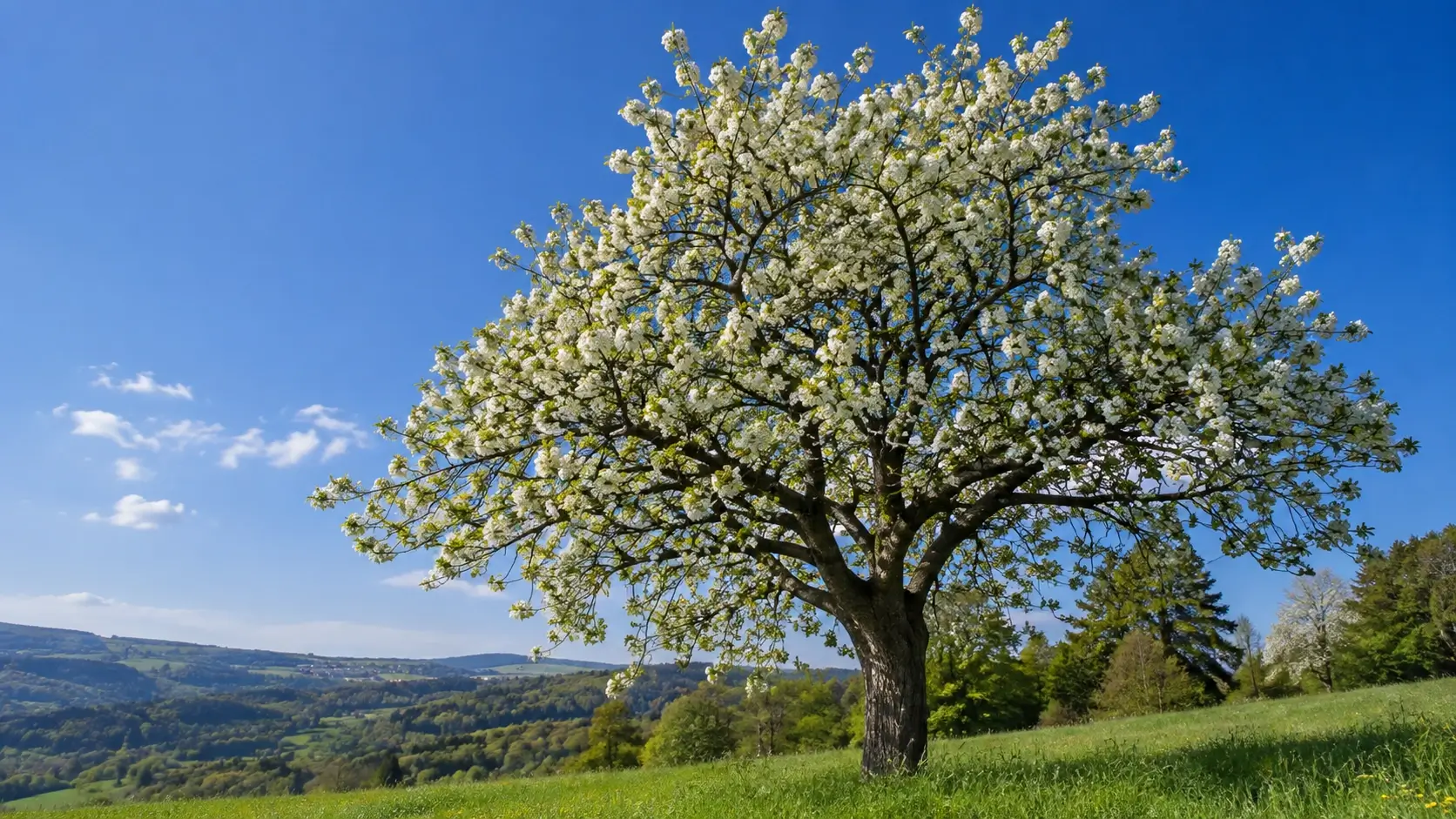
In early summer, usually around June and July, the European chestnut produces conspicuous pale catkins. Male and female flowers occur on the same tree, a botanical arrangement called monoecy. Small female flower clusters are less noticeable than the long male catkins.
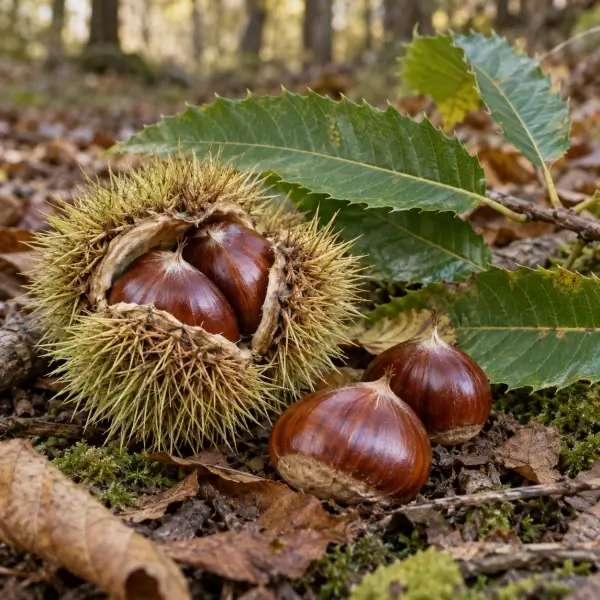
The developing fruit sits inside a protective covering armed with numerous slender spines. This structure, called a burr or cupule, is green while immature. Inside it, one to three chestnuts commonly develop.
Each chestnut has a firm, glossy brown outer shell and a thin inner skin surrounding the edible seed. The contrast between the prickly covering and the smooth nut is one of the species’ most recognizable features.
As autumn progresses, the burr turns brown and opens, often splitting into four sections. Nuts and empty cases collect beneath the crown. What began as a summer display of flowers becomes food on the woodland floor.
A Seed Arrives with Its Own Food Supply
The European chestnut’s edible kernel is also a reserve for a developing seedling. The starch that makes chestnuts useful in cooking helps support early growth before a young plant can rely on its own leaves.
Fallen nuts may settle among leaves and broken burrs beneath the parent tree. As this material decomposes, it contributes to the organic matter of the woodland floor.
It is useful to distinguish these two sources of support. Food stored inside the seed helps fuel initial development; decomposing litter contributes to the surrounding soil over time. The tree does not deliberately prepare a nursery, but its seasonal cycle creates opportunities for regeneration.
Those opportunities do not guarantee survival. A nut may be eaten, dry out, or fail to find suitable conditions. The autumn crop therefore represents both an immediate food supply and the possibility of future woodland.
How Chestnuts Became Part of Everyday Life
For generations, the European chestnut has helped connect rural communities to the landscapes around them. Across parts of southern Europe, harvesting and processing chestnuts became familiar seasonal work.
The fruit could be roasted for immediate eating or prepared for other dishes. Drying and milling expanded its usefulness, turning a seasonal crop into flour that could be used later.
This history helps explain the idea of a chestnut civilization. The phrase evokes a relationship between trees, food, work, and local knowledge. A grove could be both a place of production and a feature of community identity.
The cultural significance lies in repetition. People returned to the same trees, learned their seasonal rhythms, and passed on ways of preparing the harvest. Over generations, these practical habits gave chestnut landscapes meaning beyond their appearance.
A roasted chestnut may seem like a small pleasure today. Its history reminds us that familiar foods can once have carried much greater importance in daily life.
Why the Nuts Are So Useful in Cooking
The European chestnut differs from many familiar culinary nuts because of its starchy kernel and comparatively low fat content. It also supplies fibre and a range of vitamins and minerals.
That composition helps explain its versatility. Chestnuts can contribute substance to a meal as well as flavour, working in both savoury and sweet preparations.
Roasting brings out their characteristic aroma, while cooked kernels can be incorporated into soups, fillings, and purées. Chestnut flour offers another way to use the crop, carrying its flavour into baking.
A single carbohydrate percentage needs context. Fresh nuts contain water, whereas dried flour is much more concentrated. Variety and preparation also affect composition. Describing chestnuts as starch-rich is clearer than presenting “75% carbohydrate” as a universal figure for every form of the food.
Their appeal combines nourishment with sensory pleasure: the warmth of a freshly cooked nut, its gentle sweetness, and the association with an autumn harvest.
A Harvest Shared with Woodland Wildlife
People are only some of the visitors drawn to a chestnut crop. Wild boar, squirrels, other small mammals, and birds take advantage of food beneath the trees.
For the European chestnut, producing an edible seed creates a complicated relationship with animals. The same kernel that could become a seedling is an attractive meal. A grove is therefore a place where reproduction and feeding meet.
The tree’s contribution also changes with the season. Flowers offer resources to visiting insects in summer, while the autumn crop attracts a different group of consumers.
This makes the woodland more interesting than a simple picture of a tree bearing fruit. Leaves, flowers, seeds, bark, and surrounding vegetation all belong to a shared habitat. Watching at different times of year reveals different parts of that relationship.
Useful Wood and Life Beneath the Roots
The European chestnut has long been valued for more than its nuts. Its timber is used for furniture, joinery, and flooring, bringing the tree into homes in another form.
Durability is one reason for that value, although wood should not be described as completely immune to moisture or insects. Suitability still depends on the material and its conditions of use.
Below ground, another relationship supports the living tree. Mycorrhizal fungi associate with its roots, exchanging resources with their host. This underground partnership forms part of the wider ecology of the grove.
The mushrooms visible above the soil represent only a small part of fungal life. The relationships beneath a chestnut tree are less obvious than the harvest, but they belong in any account of how a woodland functions.
Why These Long-Lived Trees Still Need Protection
The European chestnut faces diseases that can damage even established trees. Chestnut blight, caused by Cryphonectria parasitica, attacks bark and can kill branches or entire trees. Forest Research’s chestnut blight guidance explains the disease and its symptoms.
Ink disease is a separate problem involving Phytophthora pathogens. These are fungus-like oomycetes rather than true fungi. The RHS explanation of Phytophthora root rot describes how these organisms damage roots and why drainage matters.
Preserving chestnut landscapes also means retaining their variety. EUFORGEN highlights threats to local cultivated varieties as traditional orchards are abandoned. Protecting that diversity helps preserve options for the future.
A Tree Worth Knowing Across Generations
The European chestnut brings together food, craftsmanship, wildlife, and the passage of time. Its value can be seen in an autumn meal, a piece of furniture, or the life continuing beneath an old crown.
For Luckytata, this offers a meaningful connection to the relationship between trees and people. A tree can become part of human life through ordinary, repeated encounters. Learning its story gives us another reason to value the living landscapes we inherit and pass on.