How the Bald Cypress Tree Thrives in Flooded Wetlands
The bald cypress tree can look almost impossible at first sight. A massive trunk rises from waterlogged ground, its base spreading like a stone buttress while strange woody “knees” appear around it. The soil may be soft, oxygen-poor, and seasonally submerged, yet the tree can remain upright for centuries—and, in exceptional cases, for more than two thousand years. Known scientifically as Taxodium distichum, this southern wetland giant combines structural strength, seasonal beauty, and a life history shaped by water.
Bald Cypress Tree Facts at a Glance
The species belongs to the cypress family, Cupressaceae, and is native to the southeastern United States. Its natural range is much wider than Louisiana alone: it extends through Atlantic and Gulf coastal wetlands and into the lower Mississippi Valley. In cultivation, trees commonly reach about 15 to 21 meters, while old wild specimens can rise above 40 meters. A remarkable tree recorded in Virginia reached 44.11 meters, and the giant on Cat Island, Louisiana, was measured at 5.21 meters in trunk diameter.
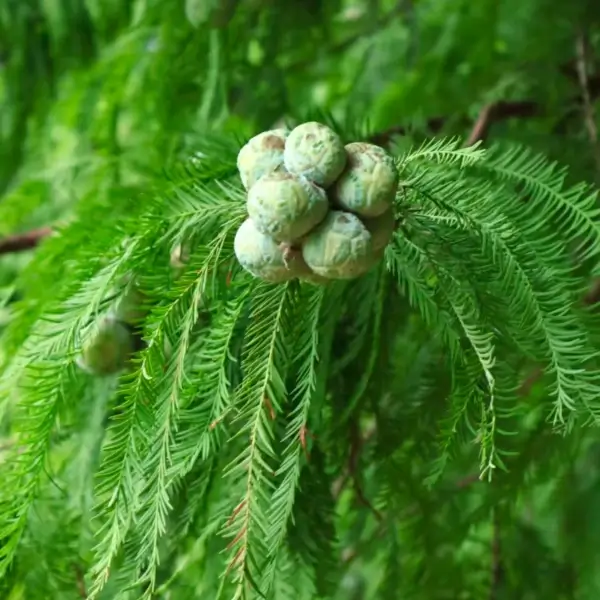
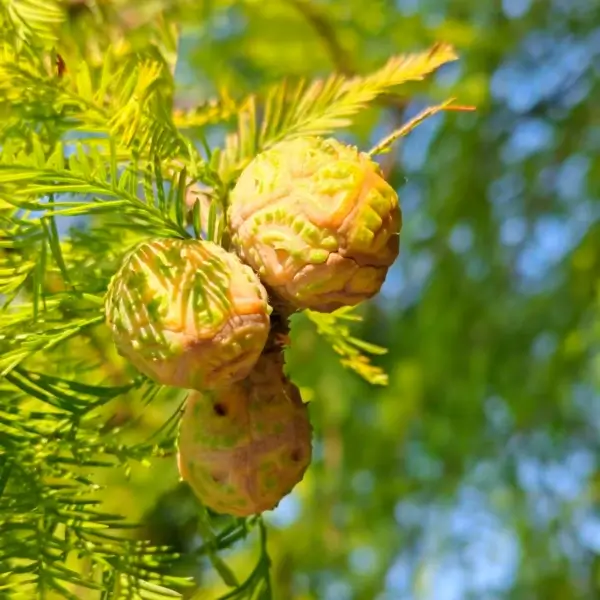
Young trees usually form a clean pyramid. With age, storms reshape the crown into a broader, less regular silhouette. The reddish-brown bark separates into fibrous strips, while the widened lower trunk develops deep flutes. Small, rounded cones mature from green to brown.
A Conifer That Lets Its Needles Fall
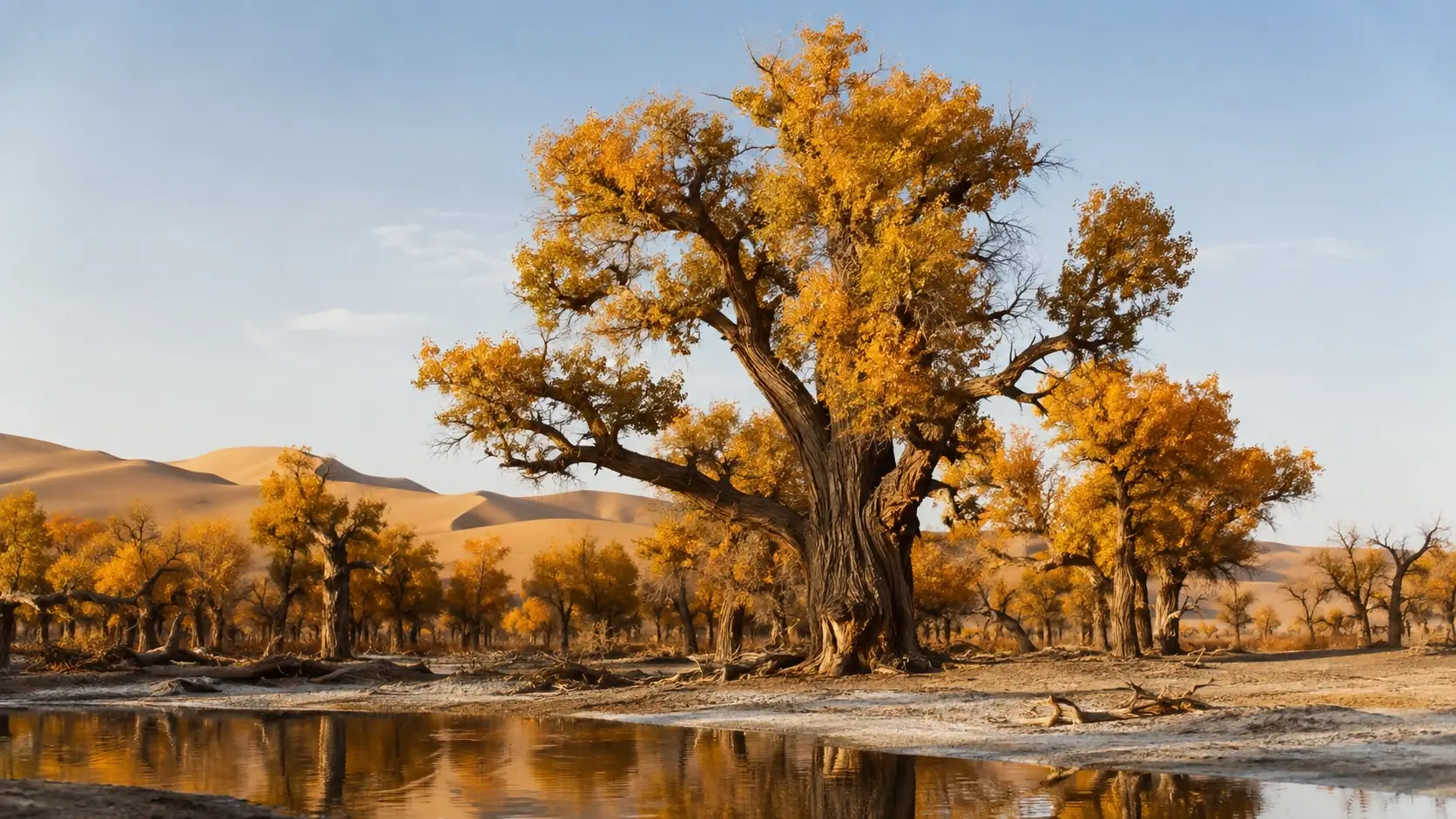
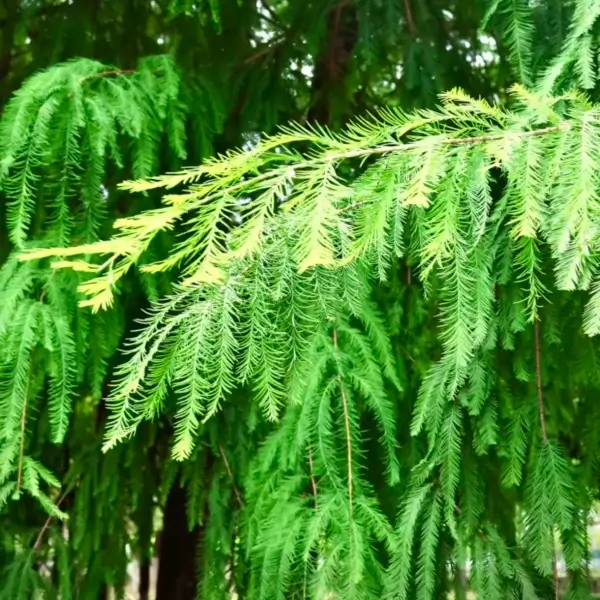
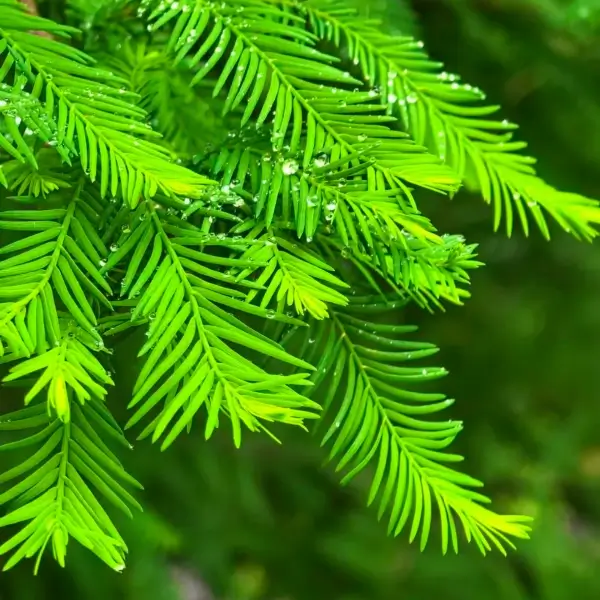
Most familiar conifers remain green throughout winter, but the bald cypress tree is one of the exceptions. Its soft, flat needles grow on slender side shoots and appear in two featherlike rows. During spring and summer, the foliage is light, fresh green. In autumn, it shifts through copper, orange, cinnamon, and rusty brown before the short shoots and needles fall together.
This shedding explains the word “bald” in its common name. It is tempting to interpret leaf fall only as protection from heavy snow, yet snow cannot explain the trait in a species native mainly to warm southern wetlands. It is more accurate to treat deciduousness as part of its seasonal growth strategy. The Missouri Botanical Garden’s plant profile confirms the foliage pattern and autumn color without assigning an unsupported evolutionary cause.
For readers learning to distinguish foliage, bark, and crown shape, Luckytata’s guide to common trees around us offers a useful introduction to practical tree identification.
How the Bald Cypress Tree Holds Firm in a Swamp
Waterlogged soil creates two problems. It is physically unstable, and the water filling its pores leaves little oxygen for underground roots. Bald cypress answers the first problem with architecture. The lower trunk expands into a broad, fluted buttress that spreads force across a larger area. Below the surface, descending roots provide anchorage while wide lateral roots extend through the upper soil. Together, this system makes mature trees surprisingly resistant to windthrow, even in hurricane country.
The most famous feature is the cypress knee, a woody projection rising from a lateral root above mud or shallow water. Its purpose is still debated. Knees have often been called pneumatophores, or breathing roots, but classic experiments found little evidence that they behave like the air-conducting roots of mangroves. They lack some tissues and surface openings expected in a conventional pneumatophore.
That does not mean knees are useless. They may add mechanical support by increasing root mass, and newer work has reopened the possibility that they assist internal aeration in a more indirect way. The honest answer is that science has not reduced them to one proven function. The Arnold Arboretum’s review of cypress knees is especially valuable because it compares competing explanations instead of repeating the familiar “tree snorkel” story as fact.
Life in Flooded Southern Wetlands
The native home of Taxodium distichum includes river swamps, bayous, floodplains, and low coastal areas from the Atlantic region west to Texas, plus the lower Mississippi Valley. The USDA Forest Service account of baldcypress describes frequent, prolonged flooding in both stagnant and flowing water. It is not merely a Louisiana tree, although it is the state’s official tree.
Flood tolerance does not mean every life stage prefers permanent deep water. Mature trees can stand in inundated ground, but successful regeneration often depends on changing water levels. Heavy seeds are carried by water and settle into new places. Germination becomes possible when floodwater recedes enough to expose wet, oxygenated soil. In this way, the bald cypress tree depends not on unchanging water but on the rhythm between flooding and drawdown.
The species also grows beyond swamps. In gardens it tolerates moisture-retentive soil and some upland sites, although it performs best with sun and reliable moisture. This flexibility makes it valuable in parks, beside lakes, and in rain gardens.
A Lifespan Measured in Millennia
Slow growth and durable wood help explain why the bald cypress tree can become extraordinarily old, but verified age requires more than an impressive trunk. Hollow centers, missing rings, and false growth bands can make visual estimates unreliable. Researchers therefore combine cross-dated annual rings with radiocarbon evidence.
In 2019, David Stahle and colleagues documented living bald cypresses along North Carolina’s Black River that were more than 2,000 years old. The oldest confirmed individual had a minimum age of 2,624 years. This corrected the older assumption that the record belonged to Louisiana. The peer-reviewed Black River longevity study also showed that ring widths preserve a precisely dated record of regional rainfall, drought, and atmospheric circulation. An ancient trunk is therefore more than a survivor; it is a natural climate archive.
That record adds a deeper perspective to the life cycle of a tree. Germination may take only days, yet the resulting organism can keep recording environmental change for longer than many civilizations have existed.
From Useful Timber to Vanishing Old Growth
Bald cypress heartwood became famous for resisting decay. It was used for shingles, siding, boats, tanks, river pilings, and other exposed structures. Its durability also made the tree commercially attractive, and large areas of old-growth forest were logged. Younger, second-growth wood does not always possess the exceptional resistance associated with old heartwood.
This history presents a difficult contrast. The same qualities that allowed ancient trees to survive wet ground made them valuable enough to cut. According to a University of Arkansas summary of the Black River research, far less than one percent of the original virgin bald cypress forest remains. Protecting surviving old-growth wetlands is therefore not simply about preserving picturesque scenery; it is about retaining an ecosystem and a biological record that cannot be recreated on a human timescale.
A Miocene Forest Preserved as Wood
The deep history of swamp cypresses reaches far beyond today’s American wetlands. In 2007, mining at Bükkábrány in northeastern Hungary exposed an extraordinary late Miocene forest. Sixteen upright stumps stood where the trees had grown roughly seven million years ago. Some bases measured more than three meters across, and portions of trunk survived to a height of about six meters.
A rapid rise in ancient Lake Pannon drowned the forest, and delta sands buried the standing trunks. Saturated, oxygen-poor conditions protected much of their woody structure from mineral replacement, leaving ancient wood rather than ordinary stone-like petrified trunks. The 2011 study of the Bükkábrány forest explains how anoxic burial preserved them.
This discovery is often simplified into the claim that modern Taxodium distichum once grew in Europe. The evidence is more interesting and more nuanced. Anatomical studies identified fossil woods such as Taxodioxylon germanicum and remains related to Glyptostrobus and modern redwoods. These were ancient members of a swamp-adapted cypress lineage, but the site should not be described as sixteen certainly identified modern bald cypresses. It reveals an ecological predecessor and close botanical world, not a simple copy of a present-day Louisiana swamp.
From American Wetlands to European Gardens
Living Taxodium distichum reached northern Europe surprisingly early. Records place it in John Tradescant the Elder’s English collection before his death in 1638, and John Parkinson described it in 1640. It later entered parks and waterside landscapes across Europe.
Gardeners valued the bald cypress tree for qualities that seem almost contradictory: monumental mass and delicate foliage, a formal young outline and a rugged old crown, an exotic swamp origin and substantial cold tolerance. It can stand alone as a specimen, line an avenue, or form a striking grove beside water. Its mature scale, surface roots, and possible knees require space, so it belongs in a large landscape rather than close to paving or a building foundation.
Why the Bald Cypress Tree Still Matters
A cypress swamp does more than hold trees. By slowing floodwater, it can trap sediment and reduce some flood impacts. Old trunks, cavities, and submerged logs provide wildlife habitat. At Black River, the trees also preserve climate evidence unavailable from modern instruments.
The bald cypress tree therefore connects several scales of time. Its autumn needles mark a single year. Its rings can record centuries of wet and dry seasons. Exceptional individuals bridge millennia, while ancient European cypress relatives extend the story millions of years into the past. Its strength comes not from defeating water but from growing with water—anchoring broadly, responding to seasonal change, and waiting for the right conditions to begin again.
That lesson fits the long view behind Luckytata’s Planting Trees for Tomorrow initiative. Protecting ancient trees and establishing young ones are different responsibilities, but both begin with recognizing that a tree’s true timescale extends far beyond our own.