How Forest Bathing Supports Human Health
For centuries, people have felt that forests carry a quiet healing energy. A walk beneath tall trees, the smell of damp soil, the sound of leaves moving in the wind, and the soft light filtering through branches can make the body slow down almost without effort. What once seemed like a poetic feeling is now being studied through science, especially in Japan, where the practice of shinrin-yoku, or forest bathing, became one of the most influential nature-based wellness concepts in the world.
Forest bathing does not mean bathing in water. It means immersing yourself in the atmosphere of the forest. Instead of treating the forest as a place for exercise or performance, shinrin-yoku invites people to slow down, breathe deeply, and experience nature through sight, smell, sound, touch, and stillness. Japanese researchers have spent decades studying how this simple practice may influence stress, blood pressure, immune activity, and overall wellbeing.
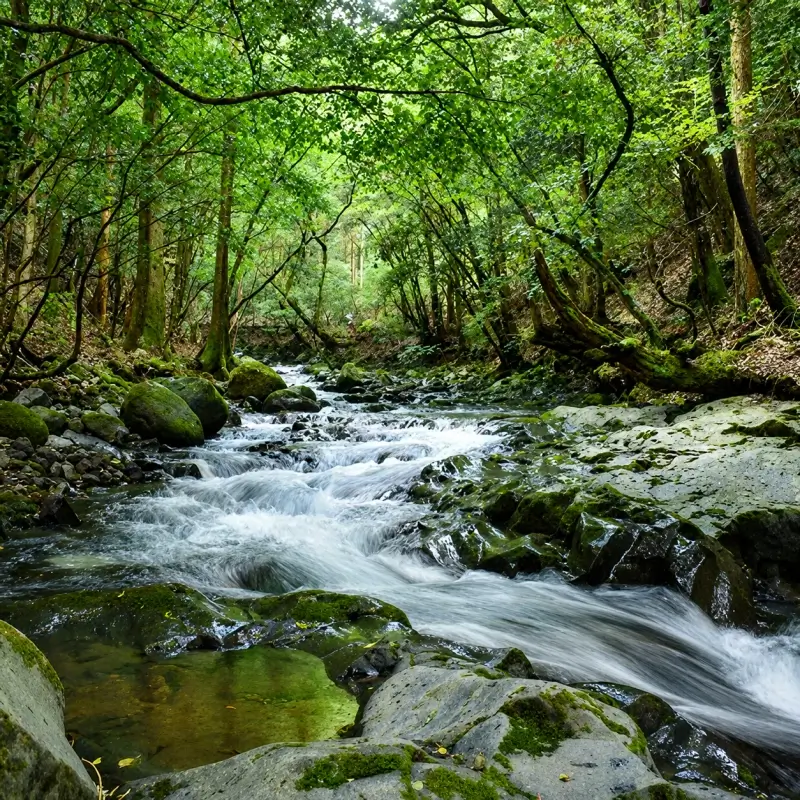
*Nameoruka Gorge: Forest and Mountain Stream
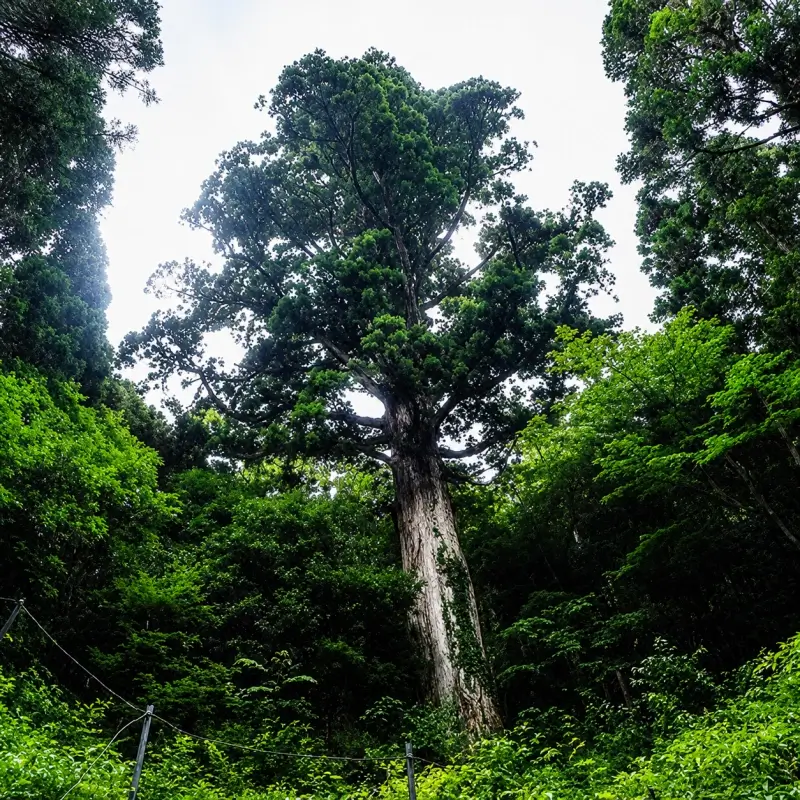
*The Taro Cedar (Taro-sugi), approximately 450 years old
From Japanese Wisdom to Scientific Research
The term shinrin-yoku was introduced in Japan in 1982 and later became the foundation of a growing field often called forest medicine. Japan was especially well suited for this research because forests cover much of the country, and nature has long played an important role in Japanese culture. Over time, researchers began asking a clear question: does spending time in forests create measurable changes in the human body?
The answer, according to a growing body of studies, appears to be yes. Research connected to Japanese forest bathing has reported changes in stress hormones, heart rate, blood pressure, mood, and immune-related markers. These findings do not mean that forests are a replacement for medical treatment. Instead, they suggest that regular contact with natural forest environments may support the body’s own systems for relaxation, recovery, and resilience.
Why Forest Air Feels Different
One important reason forests may affect human health is that trees release natural airborne compounds known as phytoncides. These are aromatic substances produced by plants and trees as part of their own defense system against insects, bacteria, and fungi. Common examples include compounds such as alpha-pinene and beta-pinene, which have been detected in forest air during Japanese forest bathing studies.
When people breathe in forest air, they are not only taking in oxygen. They are also exposed to a complex natural atmosphere shaped by leaves, bark, soil, moisture, sunlight, and plant-based compounds. Phytoncides are not the whole story, but researchers believe they are one of the key biological links between trees and human health. The experience of a forest also includes silence, natural scenery, cooler air, and the absence of urban overstimulation.
Stress Relief: The First Healing Pathway
One of the clearest effects of forest bathing is its influence on stress. Modern life often keeps the nervous system in a state of alertness. Screens, deadlines, traffic, artificial lighting, and noise can keep the body in “fight or flight” mode for long periods of time. Forests appear to help shift the body in the opposite direction.
Japanese studies have found that time spent in forest environments can reduce cortisol, a major stress hormone, while also lowering pulse rate and blood pressure. Forest bathing has also been associated with increased parasympathetic nervous activity, which is linked to rest, digestion, recovery, and calmness. In simple terms, the body begins to behave as if it is safe.
This may be one reason many people feel mentally clearer after time among trees. The forest does not demand attention in the same way a city does. It allows the mind to rest while still offering gentle sensory stimulation: moving leaves, birdsong, flowing water, natural fragrance, and changing light.
Heart Health and Metabolic Balance
Forest bathing has also been studied in relation to cardiovascular health. A systematic review and meta-analysis found that shinrin-yoku showed a significant effect on reducing blood pressure. Other studies have reported that forest walking may lower pulse rate and support healthier cardiovascular responses compared with urban walking.
There is also early research connecting forest bathing with metabolic health. One Japanese study examined forest-air bathing and walking among diabetic patients and reported decreases in blood glucose levels. This should be understood carefully.
Forest bathing should not be presented as a treatment for diabetes, and people with medical conditions should follow professional medical advice. However, the research suggests that gentle movement in a forest environment, combined with relaxation and reduced stress, may support health-related markers that matter for long-term wellbeing.
Trees, Immunity, and Natural Killer Cells
One of the most fascinating areas of forest medicine is the immune system. Japanese researcher Qing Li and colleagues studied how forest bathing trips affected natural killer cells, often called NK cells. These white blood cells play an important role in immune surveillance, including defense against virus-infected cells and abnormal cells.
Several studies reported that forest bathing increased NK cell activity and also increased levels of immune-related proteins such as perforin, granulysin, and granzymes. These proteins are involved in the body’s natural defense processes.
Because NK cells are associated with the body’s ability to recognize and respond to abnormal cells, researchers often discuss forest bathing in relation to cancer defense. This does not mean that forests cure cancer. A more accurate and responsible way to say it is that forest bathing may support immune functions that are relevant to the body’s natural protective systems.
Forest Bathing Is Not About Doing More
The power of forest bathing comes partly from doing less. It is not a race, workout, hike, or productivity method. The goal is not to count steps or reach a viewpoint. The goal is to be present.
A simple forest bathing practice can begin with walking slowly under trees for twenty to thirty minutes. Put away your phone. Breathe through the nose. Notice the scent of wood, leaves, and soil. Listen for layers of sound. Touch the bark of a tree or the surface of a leaf. Let your eyes rest on natural shapes instead of screens and straight lines. If possible, sit quietly for a few minutes and allow the body to settle.
The benefits of forest bathing may become stronger when practiced regularly. A single walk can bring calm, but repeated contact with nature may help create a rhythm of recovery in daily life.
What Trees Teach Us About Healing
Trees do not heal through force. They heal through presence, patience, and atmosphere. A tree does not ask us to become someone else. It simply invites us to return to a slower, more natural state.
At Luckytata, we see trees not only as part of nature, but also as symbols of time, resilience, connection, and quiet strength. Scientific research gives us one way to understand the healing power of forests. But on a human level, the message is simple: when we spend time with trees, we remember how to breathe, how to slow down, and how to reconnect with life.
The forest is not a miracle cure. It is something more humble and perhaps more lasting: a natural companion to human wellbeing.