The Life Cycle of a Tree
A tree’s life is not a straight line from birth to decline. It is a long cycle of establishment, contribution, and return. From the first root pushing into the soil to the old trunk slowly becoming part of the forest floor, every stage of a tree’s life carries its own purpose.
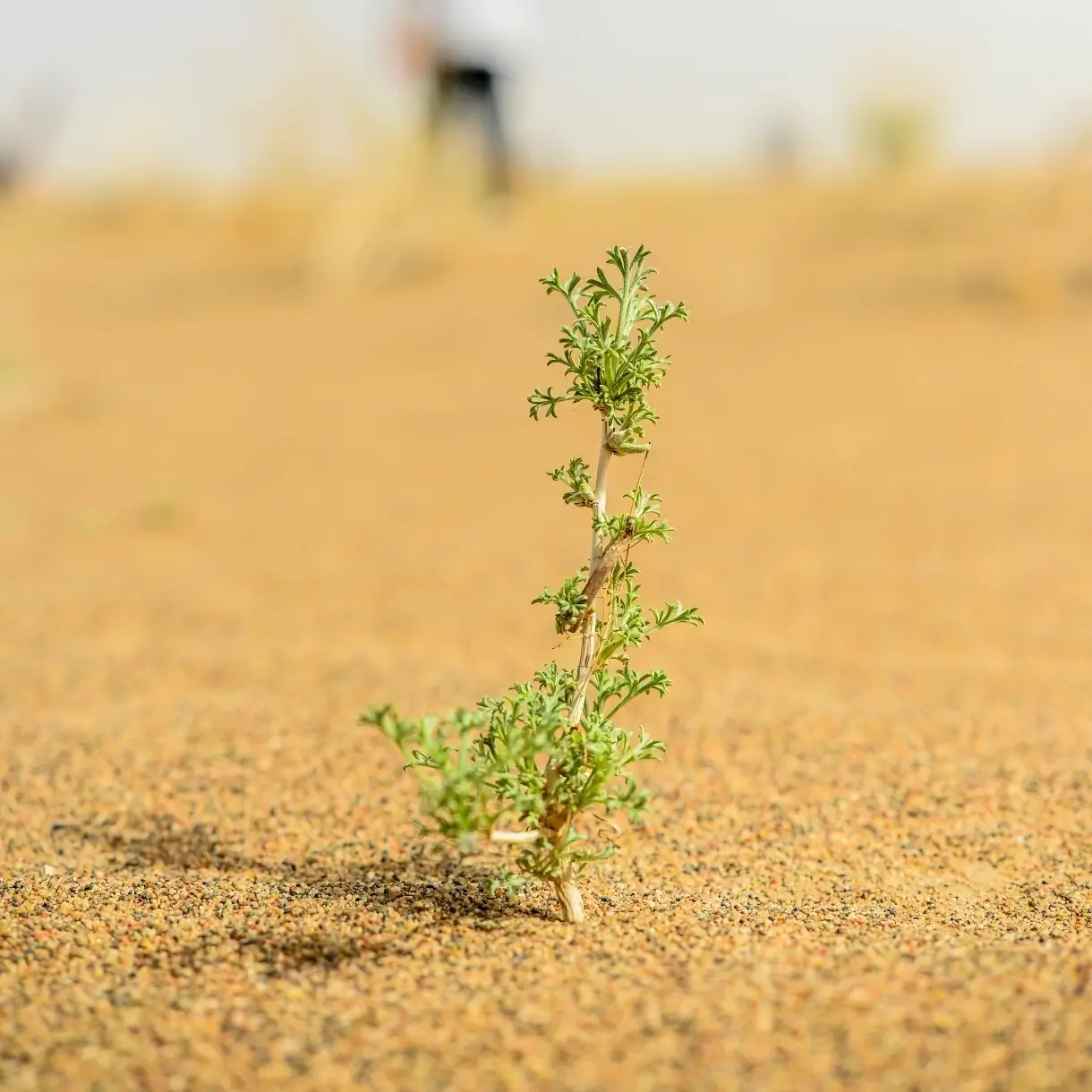
*A man-made sapling standing alone in the desert
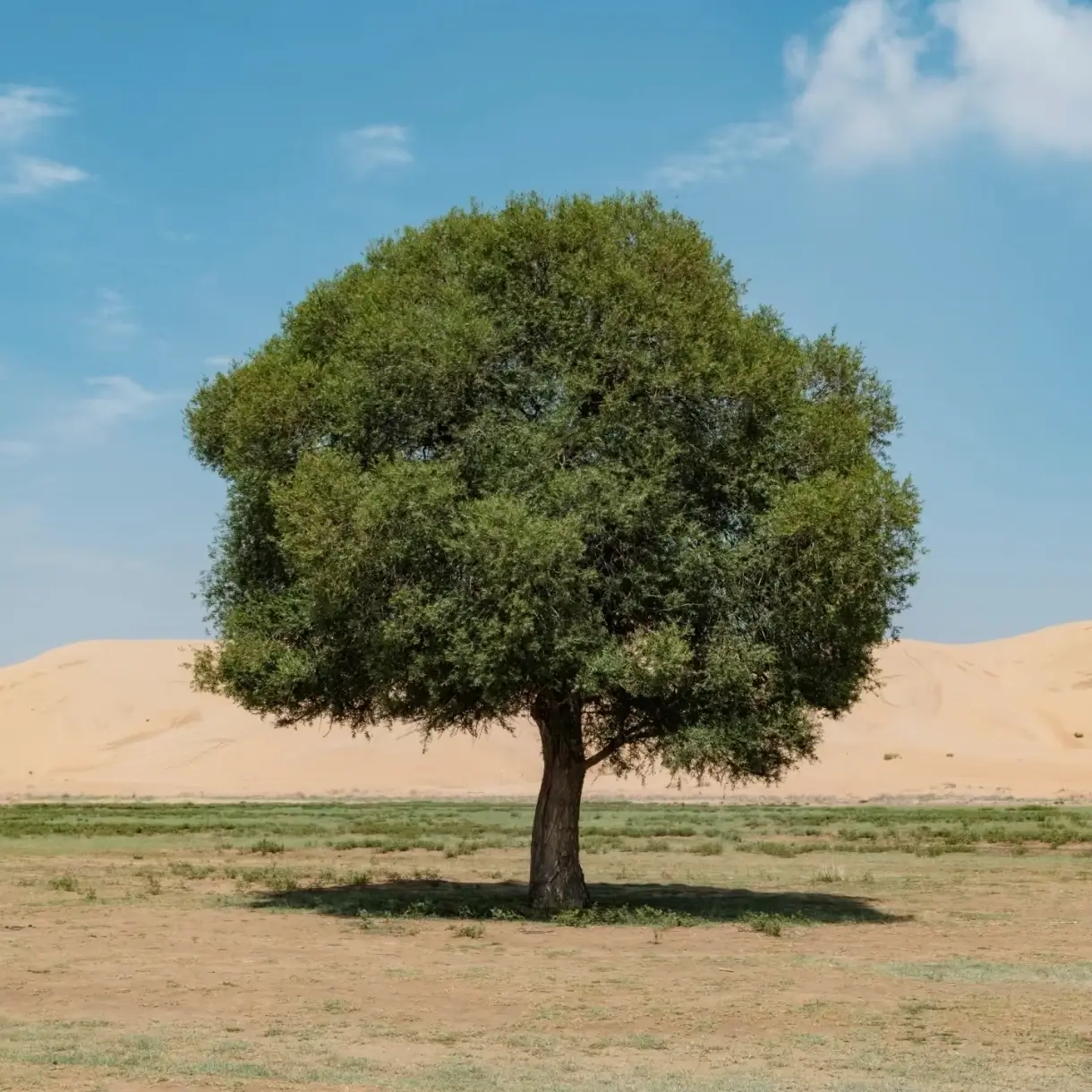
*A lush, flourishing large tree in the desert
The tree life cycle can be understood through three major stages: the juvenile period, the mature period, and the senescence period. Each stage reveals a different kind of growth. A young tree grows quickly to survive. A mature tree grows steadily while supporting the ecosystem around it. An old tree may slow down, but it continues to give back through shelter, nutrients, carbon storage, and renewal.
This is why a tree is more than a living object. It is a record of time, a structure of life, and a bridge between generations.
1. Juvenile Period: The Stage of Rapid Growth
The juvenile period begins with a seed. Inside that seed is stored energy, genetic instruction, and the possibility of an entire tree. When the right conditions arrive — moisture, oxygen, suitable temperature, and eventually light — the seed begins to germinate.
The first movement is often downward. Before a seedling can rise, it must anchor itself. The young root enters the soil, searching for water and minerals. This early root establishment is one of the most important steps in a tree’s life. Seedlings with stronger root systems are generally better able to absorb water and nutrients, which improves their chance of survival and establishment after planting or natural germination.
Above the soil, the seedling begins to open. The first visible leaves are often cotyledons, also known as seed leaves. These are not always the same as the true leaves of the mature plant. In the earliest days, the seedling may rely partly on stored seed energy. As true leaves develop, the young plant increasingly depends on photosynthesis to create its own food from light, carbon dioxide, and water.
This transition is delicate. A seedling is full of potential, but it is also highly vulnerable. Too little light, too much shade, dry soil, competition from surrounding plants, browsing animals, pathogens, or physical damage can stop its growth before it becomes established. In oak regeneration studies, early growth can be supported by seed reserves, but after the first season, seedling survival and growth depend heavily on photosynthesis; inadequate light can sharply limit survival.
That is why the juvenile stage is not simply about speed. It is about foundation.
A young tree must build roots before it can build height. It must develop leaves before it can fully feed itself. It must occupy enough space to receive light while staying flexible enough to survive stress. The rapid growth of a seedling is therefore a race for stability. In this stage, the tree teaches one of nature’s simplest lessons: before anything can rise, it must first take root.
2. Mature Period: The Stage of Stable Growth
When a tree reaches maturity, its growth becomes more stable. It may no longer look as dramatic as a seedling changing week by week, but inside the trunk, branches, leaves, and roots, complex processes continue.
A mature tree is not standing still. It is building wood, transporting water, producing sugars, forming annual rings, and interacting with the forest around it.
One of the most meaningful signs of mature growth is the annual ring. In many temperate trees, new wood is produced by the vascular cambium, a thin layer of living tissue located between the wood and the inner bark. The cambium produces xylem inward, which becomes wood. Under seasonal climates, this activity often forms one visible layer of growth each year. These layers become the rings we see in a tree trunk.
A tree ring is not just a circle. It is a memory. It records growth conditions, seasonal rhythms, and the passage of time. Wider rings may reflect favorable growth periods, while narrower rings may reflect stress, drought, shade, or other environmental limits. In this sense, the body of a mature tree becomes an archive of the environment.
During the mature period, the tree also plays a much larger ecological role. Its canopy captures sunlight and supports photosynthesis. Its roots stabilize soil and exchange resources with fungi and microorganisms. Its flowers, fruits, seeds, leaves, and branches support insects, birds, mammals, and countless other organisms.
This is also the stage when reproduction becomes central. A mature tree can disperse seeds, extend its genetic line, and contribute to forest regeneration. The tree is no longer only trying to survive as an individual; it is participating in the continuity of the forest.
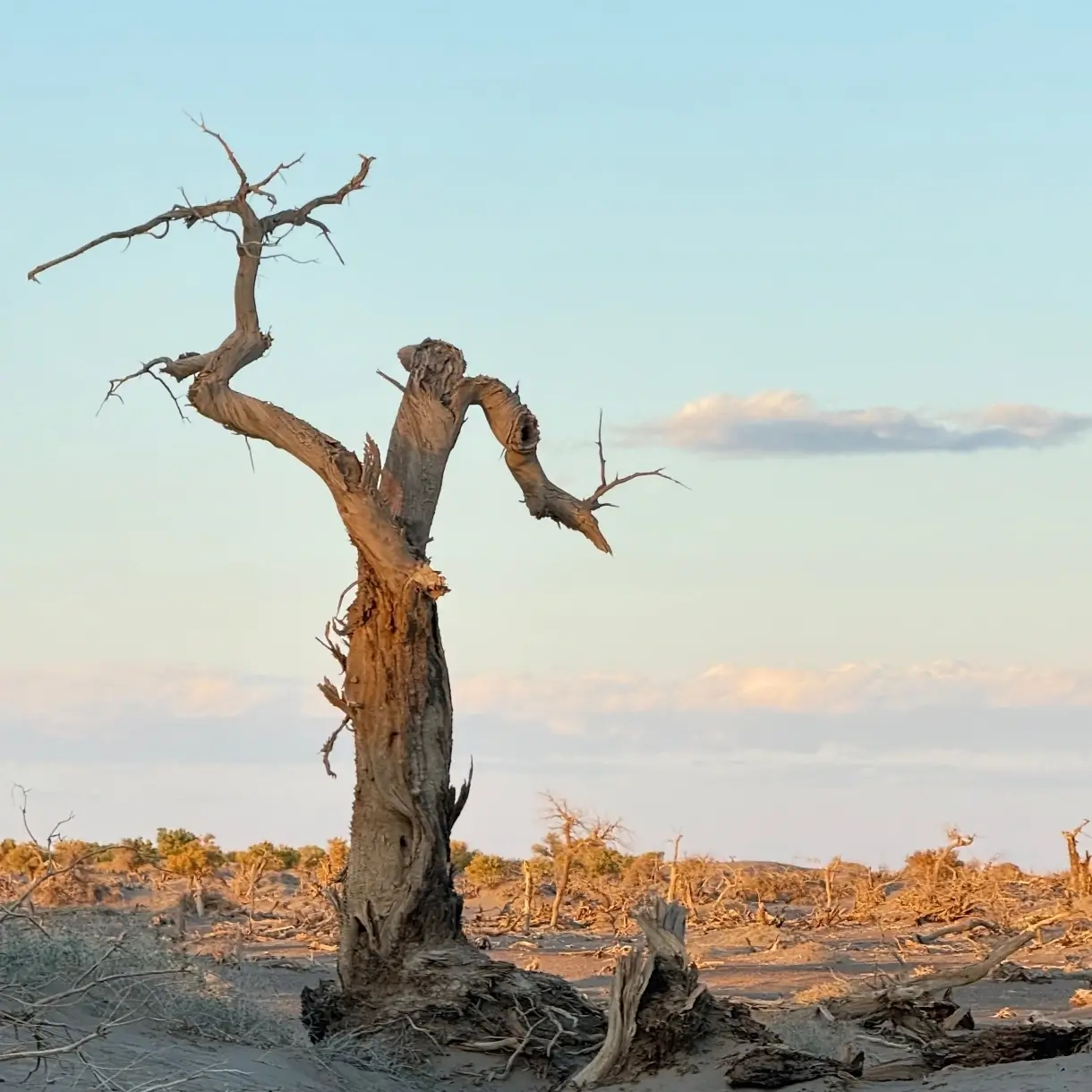
*A dried-up tree amid the desert
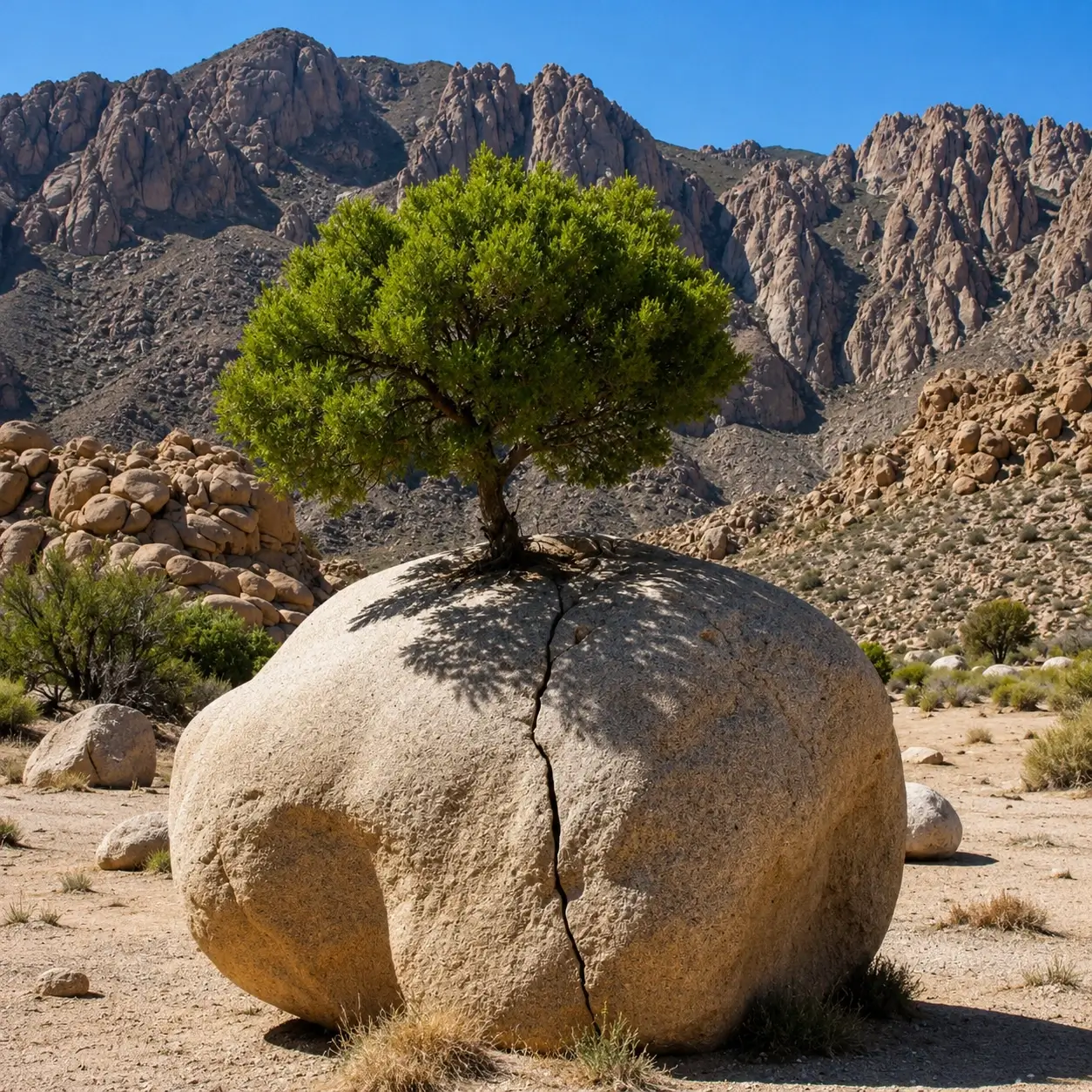
*Life Finds a Way
Stable growth does not mean passive growth. It means balanced contribution. A mature tree converts sunlight into living structure. It holds carbon in its wood. It filters air, moderates temperature, slows water movement, and creates habitats. In forests, mature and large trees often become structural anchors around which many other forms of life gather.
This is the stage of strength. The tree has survived long enough to give.
3. Senescence Period: The Stage of Slowed Growth and Ecological Return
Eventually, a tree enters an older stage of life. Its growth may slow. Its crown may become thinner. Branches may die back. Cavities may form. Fungi may enter old wounds. The trunk may hollow. Reproduction may decline in some species or individuals, although tree aging is complex and does not always follow the same pattern seen in animals. Research on tree fecundity suggests that reproductive decline can occur in large, old trees, but the evidence also shows that tree senescence is a nuanced biological process rather than a simple downward path.
At first glance, the old tree may seem to be losing strength. But ecologically, this stage can be one of the most important.
Large old trees provide features that younger trees cannot easily replace: deep bark textures, cavities, broken limbs, dead branches, hollow trunks, broad crowns, and complex microhabitats. These structures can support birds, bats, insects, fungi, mosses, lichens, and small mammals. A major review on large old trees found that they play critical ecological roles in hydrological processes, nutrient cycles, carbon storage, habitat formation, and the structure of biological communities.
Old trees are also important for carbon. Although some relative growth measures may decline with age or size, large trees can still accumulate significant biomass. A Nature study covering hundreds of tropical and temperate tree species found that, for most species studied, the rate of mass growth increased with tree size, meaning large trees can continue to fix substantial amounts of carbon.
Then comes decay — but decay is not failure.
When branches fall or trunks begin to decompose, the tree becomes part of the forest floor. Deadwood, including standing dead trees, stumps, and fallen logs, is a key component of forest biodiversity and ecosystem services. It supports fungi, beetles, birds, mammals, bryophytes, lichens, and many other organisms.
Through decomposition, nutrients return to the soil. Fungi and insects break down wood. Moisture is held in fallen logs. New seedlings may germinate near or even on decaying wood. What appears to be an ending becomes a foundation for new life.
This is the deepest meaning of the senescence period. The old tree does not simply disappear. It changes form. It returns its stored energy, minerals, structure, and shelter back to the ecosystem. The forest does not treat age as waste. It treats age as inheritance.
Every Stage Has Its Own Value
The life cycle of a tree reminds us that growth is not always about becoming taller or faster. In the juvenile stage, growth means establishment. In the mature stage, growth means strength and contribution. In the senescence stage, growth becomes renewal through return.
A seedling teaches resilience.
A mature tree teaches stability.
An old tree teaches continuity.
Together, these three stages form a complete ecological story. The young tree rises from the soil. The mature tree gives shade, seeds, oxygen, structure, and shelter. The old tree slows down, but even in decay, it nourishes the next generation. This is why trees feel timeless to us. They do not live only for themselves. They connect soil, sunlight, water, air, animals, fungi, and human memory into one living system.
To understand a tree is to understand that every stage matters. From rapid growth to stable strength, from slowed growth to ecological return, the tree’s life is not a simple path toward an end. It is a cycle of giving. And in that cycle, every ring, every root, every fallen branch, and every new seed carries meaning.